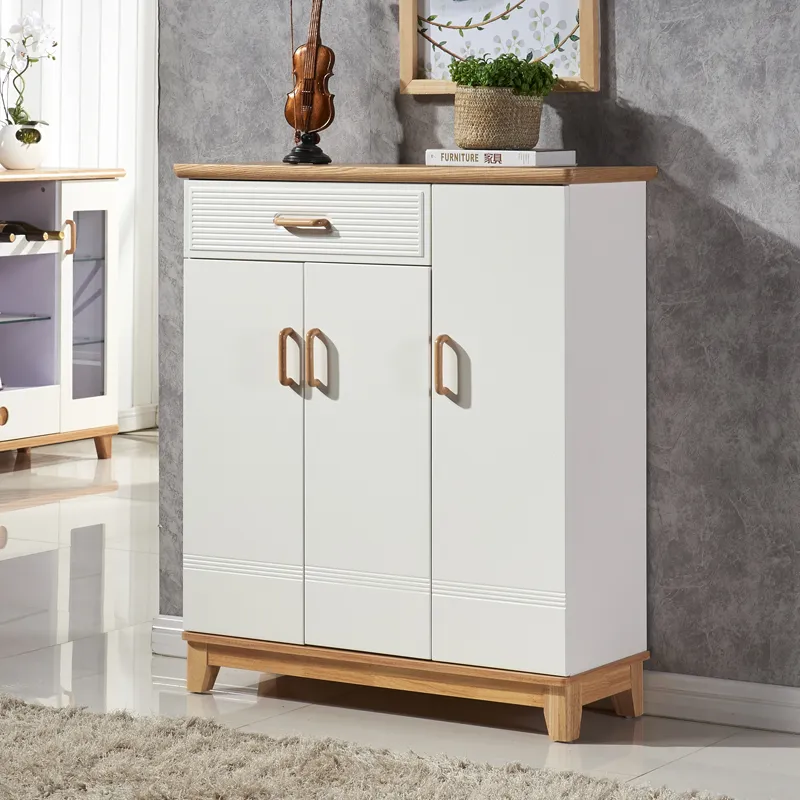
The most common wardrobe problems in small apartments are usually not "not enough space if you remove one less shelf," but rather unclear partitioning logic , insufficient height , inefficient traffic flow , and inadequate hardware and details , resulting in "seemingly having cabinets, but actually being unusable." For example, with the same 2.2m wide wardrobe, some people can fit all their clothes, bedding, and suitcases for all four seasons, while others are constantly looking for hangers, socks, and bags.
The following points can basically help you determine why your wardrobe gets messier over time. Addressing just 2-3 of these issues will significantly improve your organization experience:
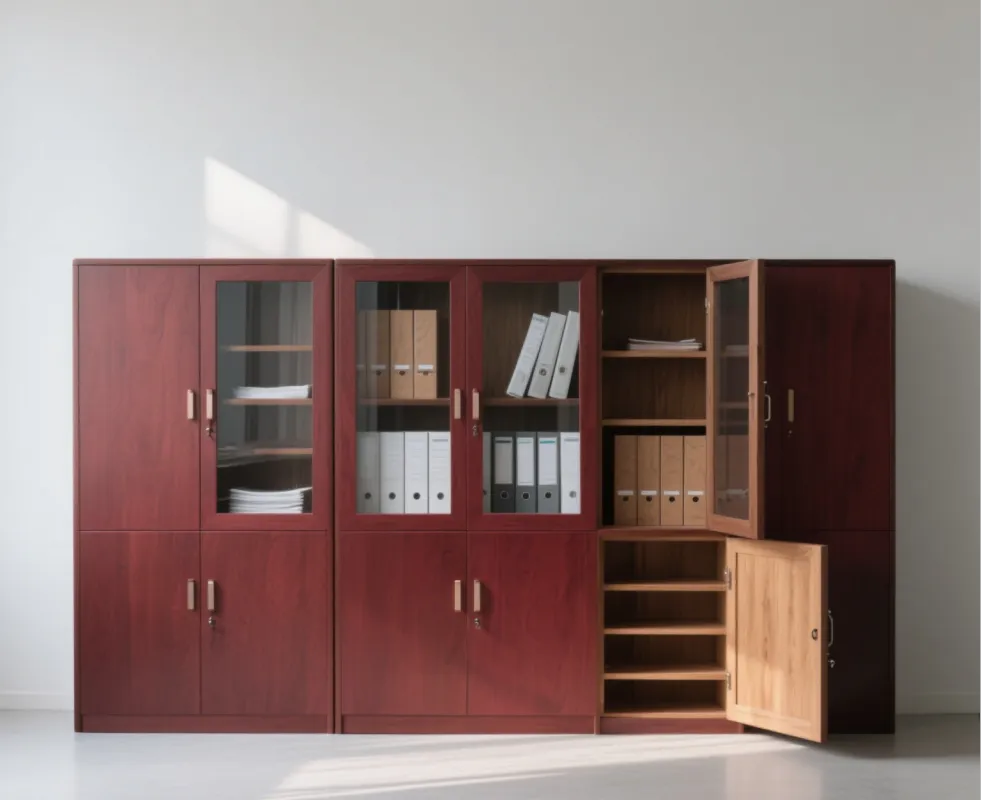
For small apartments, the most worthwhile priority is to build wardrobes that reach the ceiling . Typical home ceiling heights are 2.6m–2.8m, and common ready-made wardrobes are about 2.0m–2.2m high, often leaving a 40–70cm gap at the top. Once the wardrobe reaches the ceiling, this space can be directly converted into a large storage area, suitable for storing: out-of-season quilts , suitcases , camping gear , spare pillows , seasonal shoe boxes , etc.
Reference dimensions (closer to actual use) : The recommended height for the top storage compartment is 35–45cm ; if you want to fit a 24-inch suitcase, it is recommended to allow 45–55cm . The top door can be a flip-up door or a hinged door, and it is easier to use with a gas spring.
If the bedroom is narrow, a protruding wardrobe will encroach on the passageway and create a visually oppressive feeling. Making the wardrobe built-in (into the wall/recessed) can eliminate the "protruding piece," making the space lines cleaner, which is especially suitable for small bedrooms or apartments with narrow doorways.
The biggest problem with wardrobes in small apartments is that they look like they have many sections, but they're actually not very practical. The correct approach is to divide the wardrobe into hanging areas, folding areas, drawer areas, and miscellaneous storage areas , and then separate frequently worn items from seasonal items: frequently worn items should be placed at the ideal height between 80-160cm, while seasonal/spare items should be placed at the top or bottom.
| partition | Suggested size (for reference) | Suitable for storage | Usage Tips |
|---|---|---|---|
| Long hanging area | The height of the hanging rod from the ground is approximately 140–170 cm. | overcoat, trench coat, dress | Small drawers/storage boxes can be reserved at the bottom to make the most of the corner space. |
| Short-haul area (double-layer) | Each layer is 85–95cm high; the total height of both layers is approximately 170–190cm. | Shirts, jackets, tops | The most "profitable" design for small apartments, significantly increasing space. |
| Stacking area (shelves) | A single compartment height of 28–35cm is more convenient. | T-shirts, sweaters, loungewear | Each compartment should not be stacked too high; 8–12 items per compartment is recommended. |
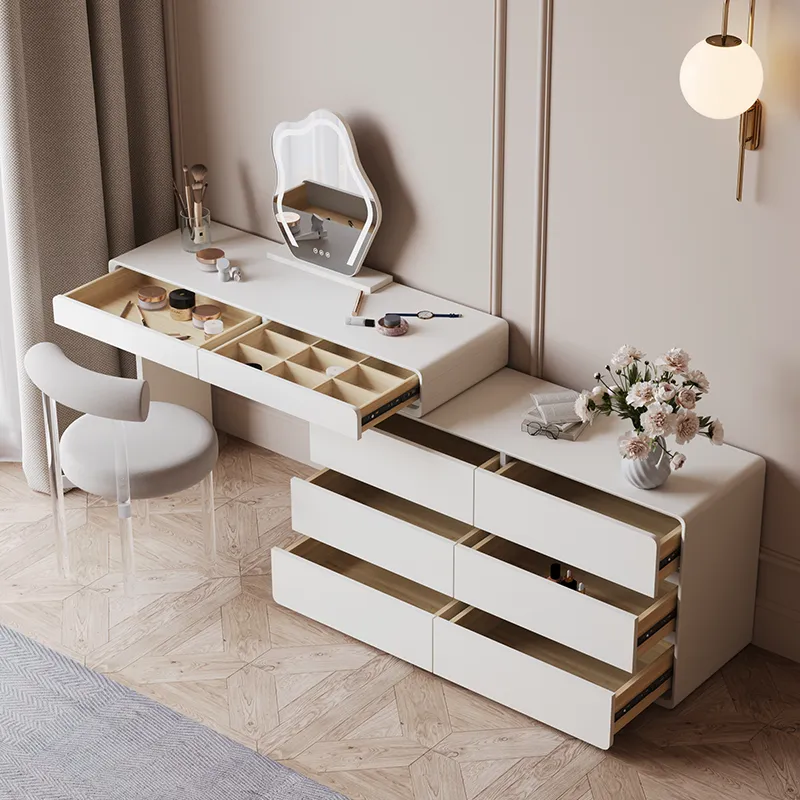
| drawer section | Drawer depth 45–50cm; height 12–18cm/each | Underwear, socks, ties, jewelry | I recommend using dividers; the neater the drawers are, the more time you'll save. |
| Bottom miscellaneous items/shoe area | Baseboard 10–12cm from the ground; shoe area height 18–22cm | Frequently worn shoes, bags, vacuum cleaners, etc. | Leave one level higher for tall boots or small appliances. |
For small apartments, more hanging space in the wardrobe isn't necessarily better. Overly large hanging areas result in clothes being crammed together, empty space underneath, and insufficient drawers; overly large folding areas can cause the wardrobe to collapse, making finding clothes feel like rummaging through a bookshelf. A more prudent approach is to first estimate the proportions based on the family's clothing structure:
Common suggestions (which can be applied directly) :
① For commuting to work, with many shirts and suits: Hanging area : Folding area ≈ 4:6
② Primarily casual, with many T-shirts and sweaters: Hanging area : Folding area ≈ 3:7
③ For two people living together with many coats: It is recommended to reserve at least one long hanging area + one set of double-layer short hanging areas to avoid "long coats taking up the entire closet".
The smaller the bedroom, the more important it is to utilize corners. An L-shaped layout can transform an awkward corner into continuous storage space. It's recommended to keep the cabinet depth between 55 and 60 cm , and place frequently used areas on the more convenient side.
The sides of a bay window are often wasted, but they are perfect for making shallow cabinets. A cabinet 30-40cm deep isn't suitable for regular horizontal hanging (clothes hangers will hit the door), but it can be used for storage: folded clothes, bags, hats, scarves, duvet covers, pillowcases, etc. If you really want to hang clothes, you can change it to vertical hanging (hanging hangers to the side) or use a telescopic rod for temporary hanging.
Layout tips : It looks better to have open shelves on one side for books/decorative items and closed shelves on the other side; it is also recommended to use storage boxes of the same color for the open shelves for a neater look.
If you can squeeze out about 1.5m x 1.5m of space in a corner of your bedroom, it's more flexible to create a mini walk-in closet. Use open racks for frequently worn clothes and storage baskets for seasonal or infrequently worn items, reducing the hassle of searching. The key is to maintain "visual order": it's recommended to use uniform hangers and storage baskets of the same size and color, which will make the overall look much more sophisticated.
| project | Recommended values (for reference) | Reason/Remarks |
|---|---|---|
| Wardrobe depth | 55–60cm | Fits standard hangers (approximately 40–45cm) + allowance for door/back panels, preventing clothing from being squeezed. |
| Sliding door reserved | A front aisle of ≥ 60cm is more comfortable | Sliding doors save space when opening, but can only be opened halfway at a time, so the partitions need to be more clearly defined. |
| Hinged door opening and closing space | It is recommended that the front of the door be ≥ 75–90cm | Unobstructed opening makes retrieving items easier; suitable for bedrooms where the area in front of the wardrobe is not cramped. |
| Shelf height | 28–35cm / grid | More suitable for "visual" stacking of folded clothing; stacking too high can easily cause it to collapse. |
| Drawer slides | Damped silent model, drawer depth 45–50cm | Smooth and durable, with frequent daily opening and closing, the difference in user experience is quite noticeable. |
Wardrobes in small apartments are typically high-traffic areas, with many openings, drawers, and hanging items. When choosing materials, it's recommended to allocate more of your budget to hardware and structural stability that offer long-term benefits.
Board material selection : Multi-layer boards offer stable structure and better moisture resistance; particleboard has a smooth surface, high cost-effectiveness, and is suitable for cabinet doors and large cabinet bodies. For bedrooms in southern regions or near bathrooms, priority should be given to moisture resistance and edge banding techniques.
Hardware recommendations : For hinges, stainless steel or high-strength alloy materials are recommended; for drawer slides, choose damping, silent models, as the difference in daily experience is significant. For floor-to-ceiling tall cabinets, it is advisable to add fasteners and a stable back panel to reduce long-term deformation and rattling.
What is the ideal depth for a wardrobe?
A depth of 55–60cm is generally recommended. This depth allows clothes to hang naturally without being squeezed, while also accommodating the thickness of the door and back panels. If the bedroom is particularly narrow, a depth of 50–55cm can be used with thinner hangers, but thick coats may feel a bit cramped.
Which saves more space: sliding doors or hinged doors?
Sliding doors are more convenient when space is limited (they don't take up the opening radius) and are suitable for small bedrooms where the bed and wardrobe are close together; hinged doors are easier to open and close, more efficient to access items, and make it easier to make zoning "visible at a glance." If you choose sliding doors, it is recommended to concentrate frequently used areas on one side to avoid frequently sliding the doors left and right.
If you are willing to send us your apartment dimensions, number of residents, and clothing type (mostly hanging or folded) , we can provide you with wardrobe partitioning suggestions and layout references that are closer to your real life, based on your movement and habits, so that every inch of space can be used clearly.
Get a "Custom Wardrobe Solution for Small Apartments" now (including floor-to-ceiling design, built-in feasibility, hanging/folding ratio, and drawer planning suggestions).


 493
|
493
|
 family shoe storage
minimalist wooden shoe cabinet
shoe cabinet selection tips
solid wood shoe cabinet maintenance
home storage solutions
419
|
wooden furniture vs panel furniture
export furniture selection
sustainable furniture materials
furniture durability comparison
home furniture buying guide
282
|
solid wood furniture vs panel furniture
furniture export material selection
B2B furniture sourcing guide
furniture material comparison
furniture export market trends
376
|
Wood wax oil for furniture maintenance
Moisture protection and cleaning of wooden furniture
Scratch repair techniques
Value-added of foreign trade home furnishings
Solid wood furniture care guide
217
|
Wooden furniture moisture protection techniques
Export furniture maintenance
Solid wood furniture dehumidification methods
Furniture scratch repair
Furniture care in humid environments
family shoe storage
minimalist wooden shoe cabinet
shoe cabinet selection tips
solid wood shoe cabinet maintenance
home storage solutions
419
|
wooden furniture vs panel furniture
export furniture selection
sustainable furniture materials
furniture durability comparison
home furniture buying guide
282
|
solid wood furniture vs panel furniture
furniture export material selection
B2B furniture sourcing guide
furniture material comparison
furniture export market trends
376
|
Wood wax oil for furniture maintenance
Moisture protection and cleaning of wooden furniture
Scratch repair techniques
Value-added of foreign trade home furnishings
Solid wood furniture care guide
217
|
Wooden furniture moisture protection techniques
Export furniture maintenance
Solid wood furniture dehumidification methods
Furniture scratch repair
Furniture care in humid environments




.png?x-oss-process=image/resize,h_800,m_lfit/format,webp)