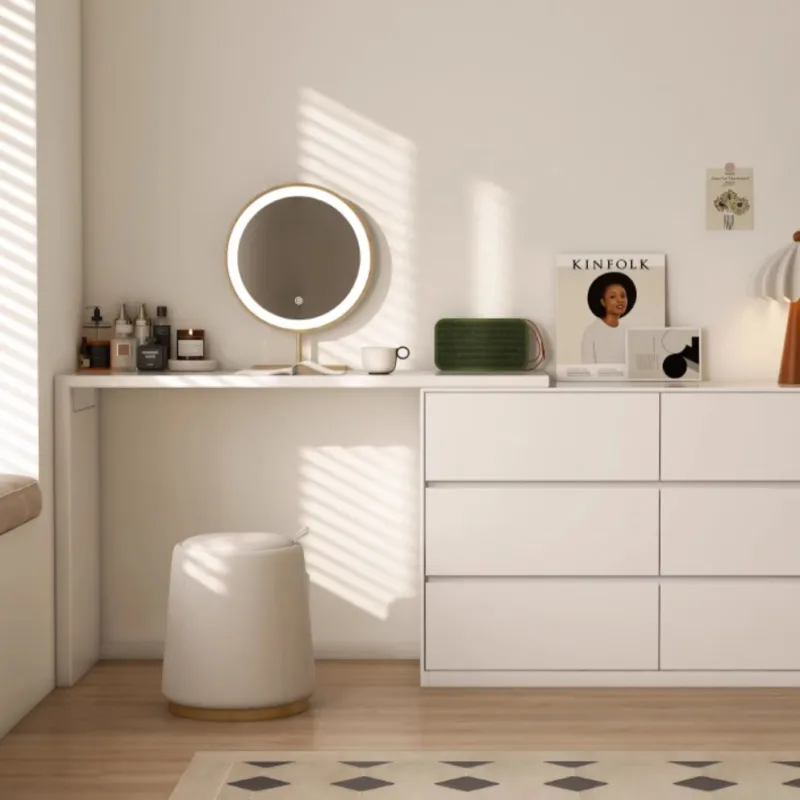
Incoming material inspection
Check wood moisture content (often targeted around 8–12% depending on climate), panel thickness, veneer consistency, and hardware batch quality.

OEM furniture manufacturing is widely used by furniture brands, wholesalers, e-commerce sellers, and project contractors who need custom furniture solutions without building their own factory. Still, when you’re sourcing across borders—or even locally—questions about process, customization, MOQ, quality control, and lead times are unavoidable.
Below is a practical, buyer-friendly FAQ designed for decision-makers sourcing custom wardrobes, cabinets, storage systems, and project furniture for residential and commercial spaces.
Furniture brands, wholesalers, Amazon/private-label sellers, real-estate developers, hospitality contractors, and office fit-out teams.
Clear answers, real-world reference numbers, and an actionable checklist to reduce sampling rounds, avoid rework, and protect delivery schedules.
OEM (Original Equipment Manufacturer) furniture manufacturing means the factory produces furniture based on your design, specifications, and branding requirements. The manufacturer focuses on engineering, materials, production, and compliance, while you focus on marketing, sales, and distribution.
In practice, OEM can range from minor modifications on a proven factory model to fully customized furniture built from your drawings, samples, or concept sketches.
OEM furniture is customizable across structure, finish, performance, and packaging. The best OEM programs offer modular options so you can maintain brand consistency while adapting to different markets or project demands.
Yes. A capable OEM manufacturer can work from: 2D technical drawings, 3D files, physical samples, mood boards, or even a well-defined concept. Most projects become smoother when your supplier’s engineering team reviews the design for manufacturability.
Typical engineering support includes: joint structure optimization, material substitution for better availability, packaging reinforcement for export shipping, and assembly simplification.
Provide a single “master spec sheet” listing dimensions, materials, edge banding, finish code, hardware brand/model, and packaging rules. Buyers who do this often reduce sampling iterations from 3 rounds to 1–2 rounds.
MOQ (Minimum Order Quantity) depends on design complexity, material type, and how many parts require new tooling. As a general market reference:
If you’re testing a new market, ask whether the factory can support a pilot run with shared materials/finishes across several SKUs to reach MOQ more efficiently.
Lead time depends on order size, customization, and material availability. A common reference timeline in the industry looks like this:
Shipping time varies by destination and method. For ocean freight, many buyers plan a 25–40 day window port-to-port as a reference, then add customs and inland delivery buffer based on local conditions.
Reliable OEM furniture quality is not one single inspection—it’s a system. The most stable suppliers implement multi-step controls that reduce defects before they reach final assembly.
Check wood moisture content (often targeted around 8–12% depending on climate), panel thickness, veneer consistency, and hardware batch quality.
Drilling accuracy, edge banding adhesion, surface defects, and assembly alignment are checked at key stations to prevent “hidden” issues.
Verify dimensions, stability, finish color tolerance, function tests (doors/drawers), accessory completeness, and export-ready packaging strength.
Many buyers also request a third-party inspection with a clear sampling standard (for example, AQL 2.5 for major defects and AQL 4.0 for minor defects) to align expectations before mass shipment.
OEM furniture manufacturing is commonly used for both retail and project channels. Depending on your needs, production can be organized by model (SKU-based) or by space (room-by-room package).
For multi-site rollouts, ask your OEM partner about batch consistency controls—especially for finish color matching and hardware model continuity across different production dates.
Export packaging is a critical part of OEM furniture success, especially for flat-pack cabinetry and fragile finishes. Standard protection methods usually include:
Foam sheets, EPE, corner protectors, surface film for high-gloss panels
Reinforced cartons, honeycomb board, strap bands, drop-test focused improvements
Clear labeling, parts lists, assembly manuals, palletizing when required
If your channel has high handling frequency (cross-docking, last-mile delivery, or e-commerce), request packaging that targets lower damage rates. In many furniture categories, keeping transit damage under 1% is a realistic benchmark with the right structure and carton design.
Yes—many OEM furniture manufacturers offer design and engineering support to help you balance appearance, functionality, and cost. This is especially valuable for custom wardrobes, cabinets, and storage systems where space utilization and installation logic matter as much as the finish.
Common support services include space planning assistance, modular system recommendations, structural reinforcement for long-span shelves, and guidance on material selection for humid or high-traffic environments.
If you’re planning a project or growing a private label line, a dependable OEM partner can save weeks in sampling, reduce defect risk, and keep finishes consistent across batches. Share your drawings, inspiration photos, or a simple requirement list—then we’ll help map the specifications into a production-ready solution.
High-value next step: Tell us your target market + installation environment, and we’ll recommend materials, finishes, and packaging that match real usage.
Explore our custom furniture solutions (wardrobes, cabinets & storage systems)

 288
|
288
|
 oak furniture characteristics
pine furniture pros and cons
walnut wood furniture benefits
solid wood furniture buying guide
wood furniture material comparison
382
|
wooden furniture moisture-proof
moisture solutions for furniture
moisture-proof in export orders
prevention of wooden furniture deformation
furniture moisture-proof tips
70
|
wooden furniture vs panel furniture
eco-friendly furniture options
home furniture buying guide
sustainable home decor
smart furniture selection
279
|
wood furniture material comparison
oak vs pine vs walnut furniture
durable hardwood furniture
sustainable wood furniture exports
wooden furniture buying guide
353
|
wooden furniture maintenance
dehumidifier box usage guide
wooden furniture moisture protection
furniture cleaning methods
scratch repair techniques
oak furniture characteristics
pine furniture pros and cons
walnut wood furniture benefits
solid wood furniture buying guide
wood furniture material comparison
382
|
wooden furniture moisture-proof
moisture solutions for furniture
moisture-proof in export orders
prevention of wooden furniture deformation
furniture moisture-proof tips
70
|
wooden furniture vs panel furniture
eco-friendly furniture options
home furniture buying guide
sustainable home decor
smart furniture selection
279
|
wood furniture material comparison
oak vs pine vs walnut furniture
durable hardwood furniture
sustainable wood furniture exports
wooden furniture buying guide
353
|
wooden furniture maintenance
dehumidifier box usage guide
wooden furniture moisture protection
furniture cleaning methods
scratch repair techniques

.png?x-oss-process=image/resize,h_800,m_lfit/format,webp)