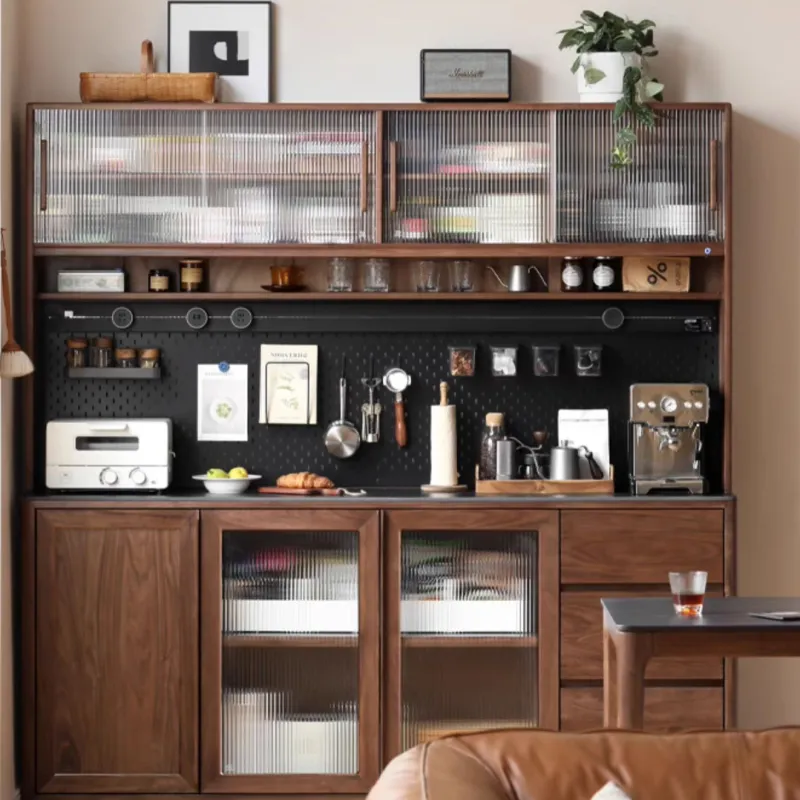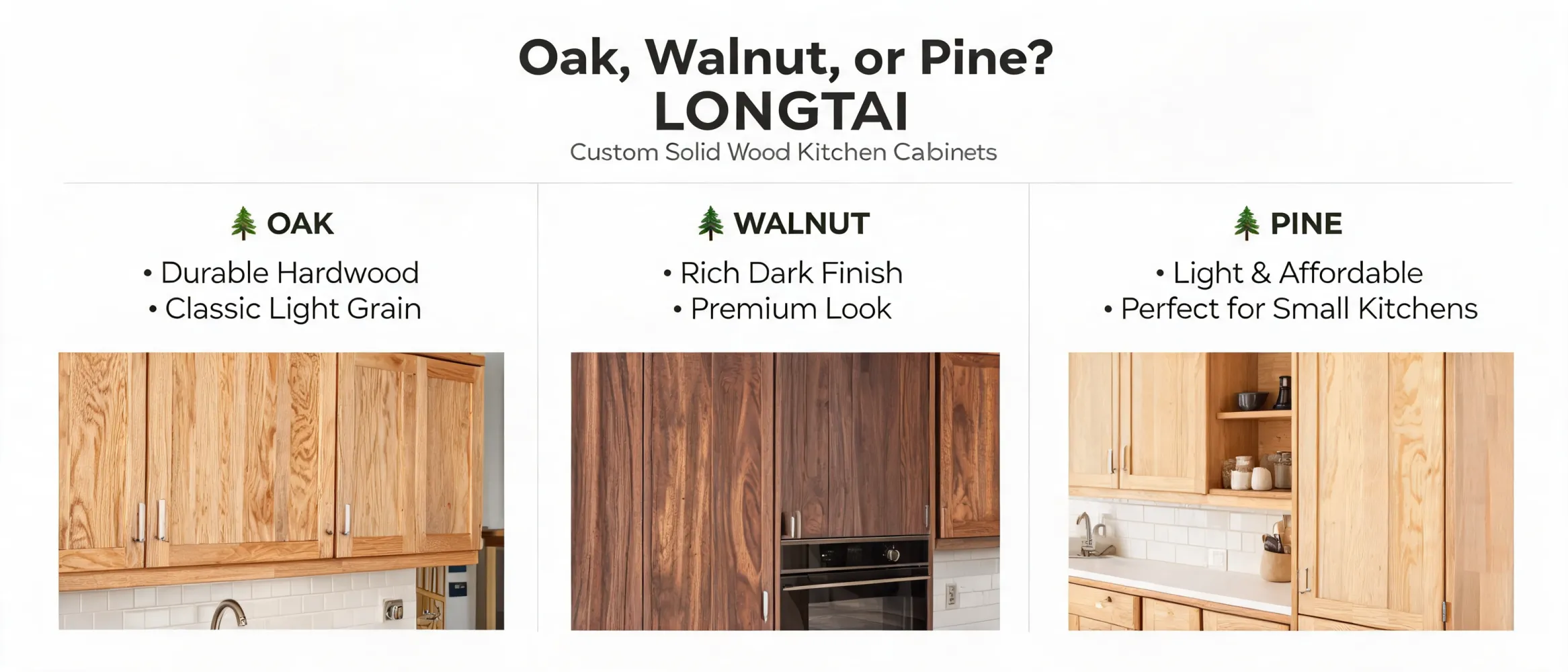
The best choice depends on how much durability, visual warmth, and budget balance you need for a compact kitchen. For Longtai custom solid wood kitchen cabinets, oak is often chosen for strength and everyday reliability, walnut for a richer decorative look, and pine for a lighter, more economical option.
A small kitchen needs more than a beautiful cabinet surface; it needs a material that supports efficient storage, practical use, and a layout that feels open rather than crowded. Longtai’s custom solid wood kitchen cabinets are designed around that idea, combining natural wood texture with space-saving cabinet planning.
When buyers compare oak, walnut, and pine, the right answer is not simply “the hardest wood” or “the most expensive wood.” The better question is which material matches the kitchen size, daily cooking habits, and design expectation in a balanced way.
Material selection becomes especially important in small kitchens because every cabinet surface, corner, and storage zone must work efficiently.
A practical comparison should focus on four points: hardness, grain appearance, dimensional stability, and how the material fits a small kitchen environment.
| Material | General Character | Best Fit | Typical Consideration |
|---|---|---|---|
| Oak | Strong texture, solid presence, practical and durable feel | Daily-use kitchens that need a stable, reliable cabinet body | Can feel visually heavier if the layout is not well balanced |
| Walnut | Deeper color tone, refined grain, more decorative appearance | Interiors that want a premium, warm, and elegant look | Usually chosen when appearance is a major priority |
| Pine | Lighter visual effect, natural look, approachable and flexible style | Smaller kitchens that benefit from a lighter, more relaxed feel | Needs thoughtful design support for long-term everyday use |
Longtai’s custom solid wood kitchen cabinets are developed around both material selection and space optimization, so the cabinet is not treated as a single product choice but as a complete kitchen solution.
The first step is to understand the room size, circulation space, and cabinet arrangement, so the material choice supports the overall plan instead of competing with it.
Frequent cooking, lighter daily use, and design-focused interiors all call for slightly different cabinet material priorities.
Drawer layout, compartment size, and integrated cabinet planning help make small kitchens more efficient, regardless of the wood selected.
A good finish and reliable hardware can improve appearance, protection, and usability in everyday kitchen conditions.
If durability and a dependable everyday feel are the main priorities, oak is often the practical option. If the kitchen design aims for a richer and more refined visual effect, walnut is a reasonable match. If the goal is a lighter appearance and a more approachable material choice, pine can be suitable, especially in compact spaces.
In other words, the best wood is the one that fits the kitchen function first and the visual style second, while still staying consistent with your budget and customization plan.
Choosing between oak, walnut, and pine is ultimately a design and usage decision. For a small kitchen solid wood cabinet, the best result comes from matching the material to the room size, storage needs, and visual direction.
With Longtai custom solid wood kitchen cabinets, the material comparison becomes part of a complete planning process, helping create a kitchen that is practical, natural-looking, and suited to everyday life.


 390
|
390
|
 solid wood furniture
panel furniture
furniture comparison guide
furniture maintenance tips
furniture durability
303
|
high-precision furniture manufacturing
CNC cutting accuracy
edge banding process
cabinet hardware installation
modular cabinet design
488
|
wooden furniture vs panel furniture
furniture purchase guide
home consumption trends
foreign trade furniture market research
consumer demand analysis
154
|
Kitchen Measurement Checklist
Net dimensions and full dimensions
Wall verticality and leveling
Customized kitchen cabinets
312
|
Comparison of advantages and disadvantages of wood furniture
Foreign trade furniture procurement guide
Differences between oak
pine and walnut
Wood furniture selection skills
Furniture material selection analysis
solid wood furniture
panel furniture
furniture comparison guide
furniture maintenance tips
furniture durability
303
|
high-precision furniture manufacturing
CNC cutting accuracy
edge banding process
cabinet hardware installation
modular cabinet design
488
|
wooden furniture vs panel furniture
furniture purchase guide
home consumption trends
foreign trade furniture market research
consumer demand analysis
154
|
Kitchen Measurement Checklist
Net dimensions and full dimensions
Wall verticality and leveling
Customized kitchen cabinets
312
|
Comparison of advantages and disadvantages of wood furniture
Foreign trade furniture procurement guide
Differences between oak
pine and walnut
Wood furniture selection skills
Furniture material selection analysis

.png?x-oss-process=image/resize,h_800,m_lfit/format,webp)