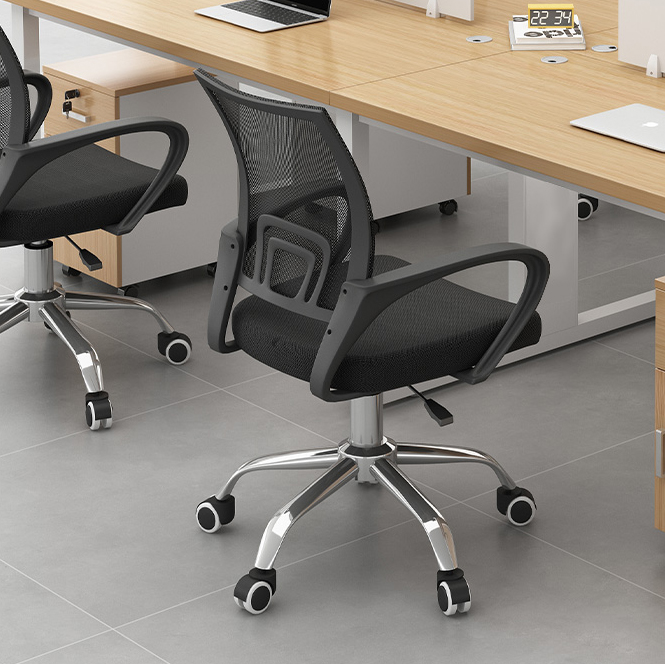
Based on the "split and combinable" characteristics of modern minimalist modular table and chair sets , Longtai Decoration has developed a set of practical office space planning methods: from the calculation of the number of workstations , key constraints such as traffic flow and corridor width , to scenario-based modular layout templates and procurement list expressions , it helps companies reduce the risk of "buying something that doesn't fit and having to rework and reconfigure" during the evaluation/procurement stage.
This page only discusses constraints directly related to the layout of tables and chairs , such as passage and evacuation principles, passage width and corner passage, wiring and storage space, and does not extend to the interpretation of general decoration specifications; if it is necessary to link with decoration/mechanical/fire protection, the requirements of the project location and site conditions shall prevail, and it shall be reviewed in conjunction with the professional party.
Key planning points: The value of modular furniture lies not in its ability to be assembled, but in its ability to remain comfortable to walk on, sit on, and maintain after assembly, and to be clearly expressed in a checklist for easy procurement and acceptance.
Before using the layout template, it is recommended to standardize the workstation measurement criteria to avoid overcrowding or blocked aisles caused by "buying based on the number of employees." Internal alignment can be performed according to the following dimensions:
Distinguish between open office areas, private cubicles, meeting/collaboration areas, and auxiliary areas such as printing/storage areas. First, determine which areas need to be equipped with combination tables and chairs, and which areas do not.
For teams that frequently travel for work, have flexible work arrangements, or have many visitors, the ratio of shared workstations to temporary workstations can be determined first, and then the required number and combination of modules can be decided.
"Additional module slots" are reserved for future expansion or team restructuring, and modular combination tables and chairs are more convenient for phased procurement and subsequent rearrangement.
Note: The output of the workstation calculation should include three items: target number of workstations (fixed/shared) , expected collaborative workstations , and reserved workstations . This will ensure a smooth mapping to the layout template and procurement list later.
The layout review of the modular tables and chairs should be quickly reviewed using a "constraint checklist." The following constraints are strongly related to the table and chair layout and are best checked item by item on the floor plan:
The above constraints are not "the more the better," but rather to help with decision-making: when space is limited, prioritize ensuring passage and basic seating experience , and then optimize collaboration density and visual effects.
Modern minimalist modular table and chair sets can be combined in modules to form different "workstation clusters". The following templates are for communication and quick drawing generation: You can select a template first, and then fine-tune it by adding the number of workstations and key constraints.
To ensure accurate procurement and delivery of "modular layouts," it is recommended to translate the layout results into actionable checklist items. Below is a directly applicable checklist structure (use as needed) for internal approval, procurement communication, and goods receipt and acceptance:
By using a checklist approach, the "flexibility" of modular tables and chairs can be maintained consistently throughout the procurement and delivery phases: the same layout standard can be used for budgeting and also facilitates acceptance verification.
Based on the structure of the workforce, the proportion of shared workstations, and the reservation for expansion, a reusable "workstation calculation standard" should be first established to reduce subsequent repeated drawing revisions and repeated order placements.
Select from templates such as straight/back-to-back, island, L-shaped corner, partition/meeting room, and conduct on-site verification based on key constraints such as traffic flow, corners, wiring, and storage space.
The modular layout is transformed into a list of items: "Number of modules + Connectors + Wiring scheme + Optional items + Pre-installation/Acceptance points", which facilitates internal approval, procurement, and delivery acceptance.
If you are currently in the process of selecting modern office furniture, we recommend preparing the following: floor plan dimensions/column and doorway information , target number of workstations (fixed/shared) , meeting and collaboration needs , and power/network port locations . The clearer the information, the easier it will be to complete the modular layout and procurement list in one go.
The value of modern minimalist modular desk and chair sets lies in their clearer calculation methods, more reusable layout templates, and more actionable checklists, allowing for a more stable balance between efficiency , comfort , and maintainability in office spaces. Longtai Decoration will continue to focus on the implementation details of modular office furniture, providing space planning methods that facilitate easier procurement and delivery.
 477
|
477
|
 Customized wardrobes for small apartments
Wardrobe storage design
Wardrobe layout in a small bedroom
Floor-to-ceiling wardrobe
Built-in wardrobe
419
|
wooden furniture vs panel furniture
export furniture selection
sustainable furniture materials
furniture durability comparison
home furniture buying guide
282
|
solid wood furniture vs panel furniture
furniture export material selection
B2B furniture sourcing guide
furniture material comparison
furniture export market trends
166
|
wood vs panel furniture
B2B furniture supplier tips
sustainable furniture materials
plywood vs solid wood
furniture material selection guide
42
|
Wooden furniture vs panel furniture
Furniture material selection guide
Export furniture procurement advice
Environmental furniture comparison
Home decoration material analysis
Customized wardrobes for small apartments
Wardrobe storage design
Wardrobe layout in a small bedroom
Floor-to-ceiling wardrobe
Built-in wardrobe
419
|
wooden furniture vs panel furniture
export furniture selection
sustainable furniture materials
furniture durability comparison
home furniture buying guide
282
|
solid wood furniture vs panel furniture
furniture export material selection
B2B furniture sourcing guide
furniture material comparison
furniture export market trends
166
|
wood vs panel furniture
B2B furniture supplier tips
sustainable furniture materials
plywood vs solid wood
furniture material selection guide
42
|
Wooden furniture vs panel furniture
Furniture material selection guide
Export furniture procurement advice
Environmental furniture comparison
Home decoration material analysis