Choosing kitchen cabinets isn't really about aesthetics; it's about ensuring they withstand the long-term effects of high temperatures, humidity, and cooking fumes, remaining sturdy and resilient without developing odors, bulging, or warping. Many families only realize after moving in that choosing the wrong cabinets can lead to high costs for subsequent repairs and a diminished user experience.
This guide focuses on two main themes: environmental friendliness and formaldehyde-free properties , as well as high-temperature resistance . It combines the characteristics of common board materials, referenceable testing data, and the logic of selecting materials for kitchen partitioning to help you understand the key points clearly at once.
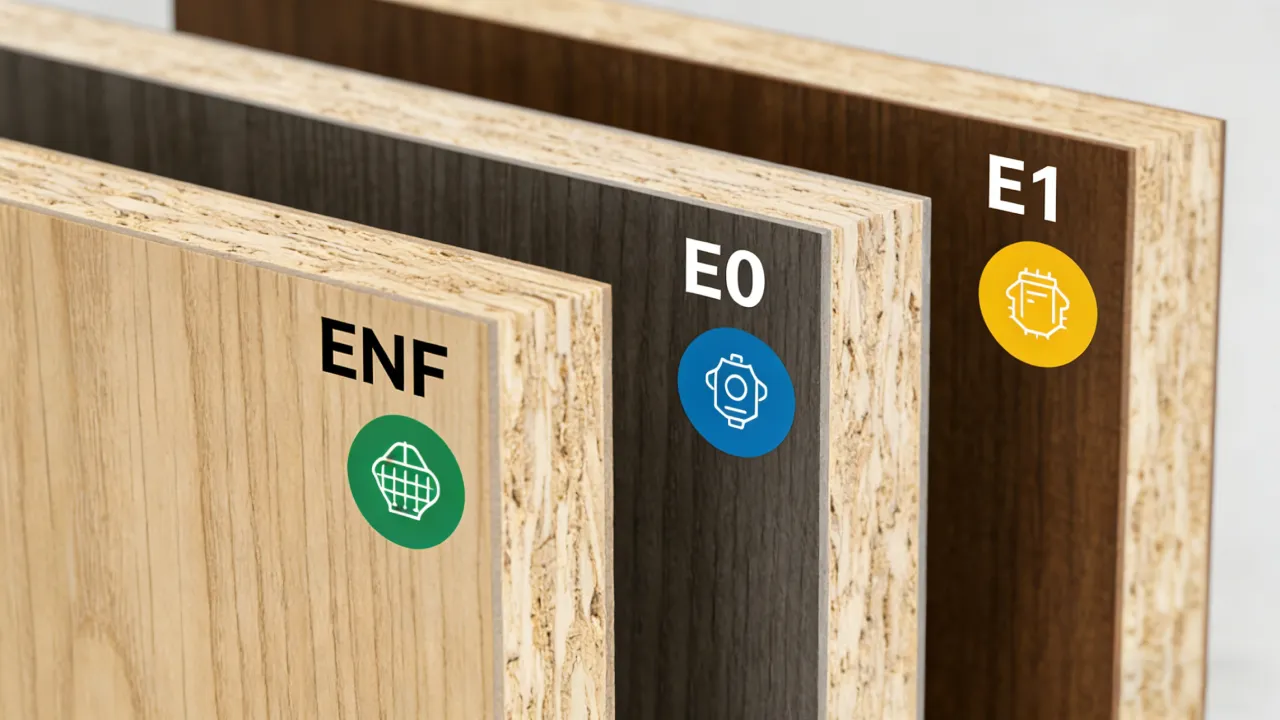
When choosing kitchen cabinets, you often hear claims such as "formaldehyde-free", "zero formaldehyde", and "baby-grade". A more reliable approach is to break them down into two things: (1) whether the base material is natural or does not contain formaldehyde-based adhesives; and (2) whether the finished product has passed authoritative testing and meets quantifiable indicators.
| Metrics/Certification | What you should watch | Reference significance |
|---|---|---|
| E1 / E0 level | Does the test report specify the applicable standard, the submitted sample, the test method, and the conclusion? | Used to determine the formaldehyde emission control level of engineered wood products, suitable for "bottom-line" screening. |
| ENF level (common in high-standard domestic markets) | Does the report indicate the formaldehyde emission level? The reference value is usually ≤0.025 mg/m³ (climate chamber method). | More suitable for families with sensitive odors, or families with babies, elderly people, or pets. |
| Statements such as "Formaldehyde-free/NAF" | Make sure you distinguish between "formaldehyde-free adhesive" and "formaldehyde-free finished product"; try to request third-party testing. | Pay more attention to the production process and the source of adhesives, and don't just listen to verbal promises. |
Practical tip: Kitchen cabinets are "system products," not just about the boards. The surface treatment of the doors, cabinet body, back panel, edge banding, adhesives, and even hardware can all affect odor and long-term stability. Asking the seller for a complete cabinet inspection or at least a description of the core boards and edge banding process will be more reliable.
The "high temperatures" in the kitchen don't just come from hot pots. The sides of the stove, next to the oven/steam oven combo, above the dishwasher, and near the range hood can all experience prolonged temperature increases combined with thermal expansion and contraction . High-temperature resistance requires a comprehensive assessment: the thermal stability of the substrate, the heat resistance of the surface layer, the heat resistance of the edge sealing, and the structural resistance to deformation.
| Location/Scene | Possible temperature (reference) | Risk points |
|---|---|---|
| The sides of the stove and the area near the back wall | 60–120℃ (higher for short periods) | Door panel warping, edge banding peeling, surface bubbling |
| Steam oven/dishwasher peripherals | 50–90℃ (with water vapor) | High temperature and humidity cause bulging, mold, and metal corrosion. |
| Countertop in contact with hot pot | 100–250℃ (higher temperature at the bottom of the pot) | The countertop is cracked, has lost its shine, or has discolored; it is still recommended to use a heat-resistant mat. |
Therefore, "high temperature resistance" is not just a matter of countertop materials; cabinet panels, door panel finishes, and edge banding are equally important in the stove area and steam/grill area. You can directly ask the seller: What is the temperature resistance of the edge banding? Is the side panel near the stove insulated/protected with metal?
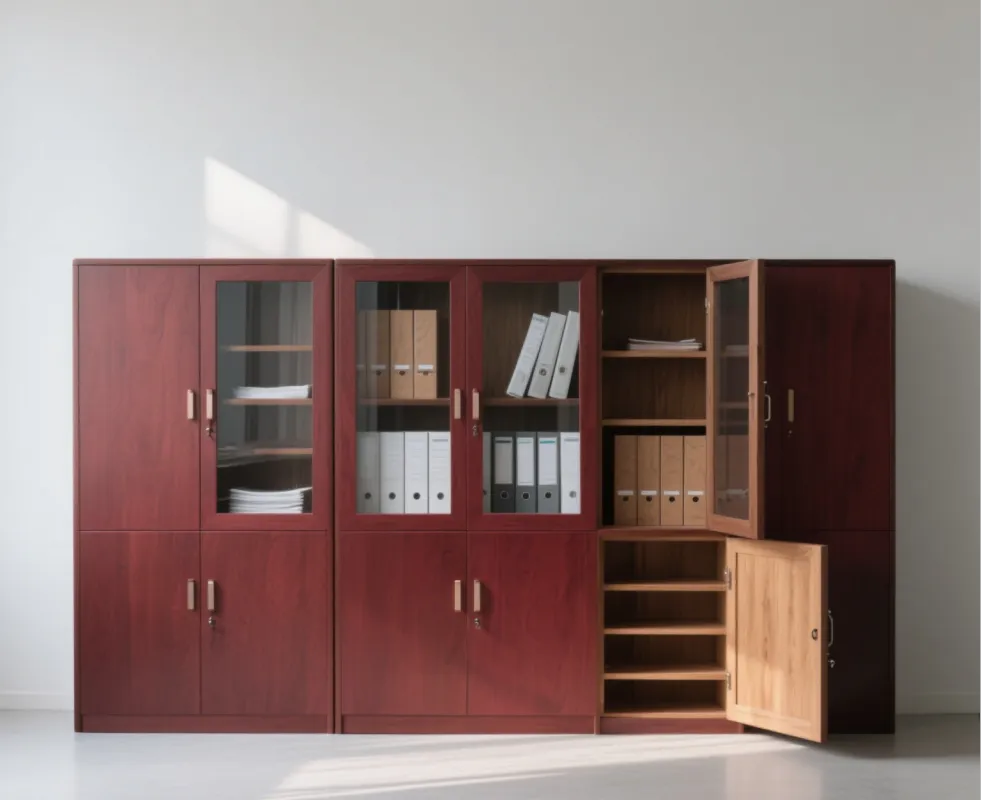
Wooden (or parts of a Wooden composite structure with a high proportion of Wooden) generally offers a warmer feel and a more spacious atmosphere. If the surface coating and adhesives are properly controlled, the overall odor is usually more pleasant. Wooden's strengths are its naturalness and stable feel ; however, it's important to note that in an environment like a kitchen, it is more susceptible to damage from prolonged humidity and temperature fluctuations .
The biggest advantage of stainless steel kitchen cabinets is that they do not rely on formaldehyde-containing adhesives to achieve structural strength, and the metal material excels in high-temperature resistance and fire resistance. For families who frequently cook heavy Chinese dishes and stir-fry, stainless steel provides a strong sense of security in the stove area.
Quartz stone is commonly used as a countertop material because of its high hardness, wear resistance, and good water resistance, making daily chopping and cleaning relatively hassle-free. It also generally performs well in terms of high temperature resistance. However, a countertop that is "heat resistant" does not mean it is "forever resistant to thermal shock." It is still recommended to use a heat-resistant mat when placing a hot pot directly on it, which can significantly reduce the risk of cracking and loss of shine.
Many material mishaps aren't due to poor material quality, but rather to misplaced materials : putting heat-sensitive materials near the stove and moisture-sensitive materials near the sink. A smarter approach is to "select materials by zone," spending your budget wisely.
| Kitchen area | Priority | More recommended pairing ideas |
|---|---|---|
| near the stove | High temperature resistance, flame retardant, and easy to clean | Stainless steel cabinet body/side panels or with added metal heat-insulating panels; quartz countertop with heat-insulating pad. |
| Near the sink and dishwasher | Moisture-proof, mildew-proof, and deformation-resistant | Stainless steel is more worry-free; if you choose woodwork, be sure to do moisture-proof edge sealing and waterproofing of the bottom skirting. |
| Storage area/tall cabinet area | Environmentally friendly, load-bearing, and structurally stable | Prioritize high-environmental-grade engineered wood or Wooden; pay attention to the thickness of the back panel and the quality of the connectors. |
Not necessarily. Price can come from brand premium, hardware configuration, design complexity, or craftsmanship details. What truly ensures health and durability is a combination of testing reports, a materials list, and a structural design . With the same budget, instead of pursuing "the same materials throughout the house," it's better to focus on stronger protection in the stove and sink areas.
Not necessarily. High-environmental-grade engineered wood products (such as those meeting stricter emission controls) actually have advantages in stability, cost control, and processing consistency. The key is to look at the grade, the edge banding, and the overall manufacturing process , rather than rejecting everything outright.
Quartz countertops generally have good heat resistance, but they are more susceptible to thermal shock (instantaneous contact with a hot pot bottom followed by wiping with cold water/temperature differences in the environment) over long-term use. Developing the habit of using a heat-resistant mat will generally extend the lifespan of your countertop; this is more valuable than worrying about one or two parameters.
Provide your home layout, common cooking methods (stir-fry/light meals), whether you have a dishwasher/steam oven, and your preferred style. We will help you put the solutions into an actionable list based on four dimensions: heat resistance of the stove area, moisture-proof structure, edge sealing process, and environmental testing .
Get now: A list of eco-friendly and heat-resistant materials for kitchen cabinets (including zoned recommendations) + personalized material suggestions for your kitchen.
Consult on customized environmentally friendly, formaldehyde-free, and high-temperature resistant kitchen cabinet solutions

 476
|
476
|
 Customized wardrobes for small apartments
Wardrobe storage design
Wardrobe layout in a small bedroom
Floor-to-ceiling wardrobe
Built-in wardrobe
336
|
wooden shoe cabinet selection
minimalist shoe cabinet design
wooden shoe storage solutions
how to maintain wooden shoe cabinet
best shoe cabinet for families
382
|
wooden furniture moisture-proof
moisture solutions for furniture
moisture-proof in export orders
prevention of wooden furniture deformation
furniture moisture-proof tips
493
|
family shoe storage
minimalist wooden shoe cabinet
shoe cabinet selection tips
solid wood shoe cabinet maintenance
home storage solutions
282
|
solid wood furniture vs panel furniture
furniture export material selection
B2B furniture sourcing guide
furniture material comparison
furniture export market trends
Customized wardrobes for small apartments
Wardrobe storage design
Wardrobe layout in a small bedroom
Floor-to-ceiling wardrobe
Built-in wardrobe
336
|
wooden shoe cabinet selection
minimalist shoe cabinet design
wooden shoe storage solutions
how to maintain wooden shoe cabinet
best shoe cabinet for families
382
|
wooden furniture moisture-proof
moisture solutions for furniture
moisture-proof in export orders
prevention of wooden furniture deformation
furniture moisture-proof tips
493
|
family shoe storage
minimalist wooden shoe cabinet
shoe cabinet selection tips
solid wood shoe cabinet maintenance
home storage solutions
282
|
solid wood furniture vs panel furniture
furniture export material selection
B2B furniture sourcing guide
furniture material comparison
furniture export market trends