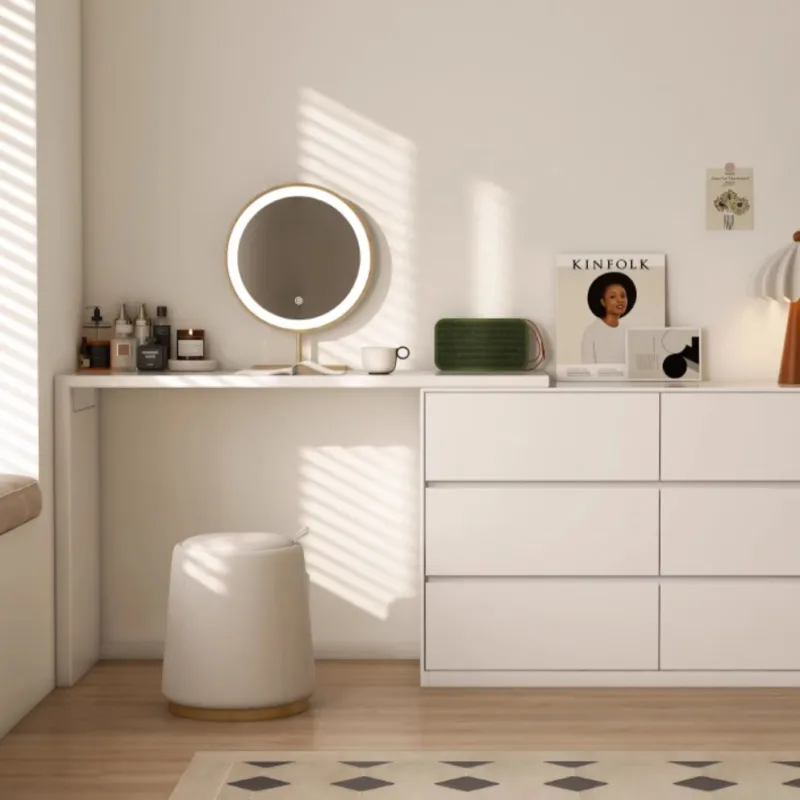
In modern cabinetry and custom interiors, “quality” is not a slogan—it is a chain of measurable decisions. The moment one link slips (humidity, cutting accuracy, edge sealing, hardware torque), the end user will feel it: a door that sags, a panel that chips, a drawer that drifts off-line. Special report
In a well-run factory, high precision is not an “extra”—it’s a process discipline. This report looks at the core checkpoints that separate dependable cabinetry from “looks-good-today” furniture: CNC cutting accuracy, edge banding integrity, hinge-and-runner installation, perforated panel logic for flexible storage, and modular construction that keeps real homes and offices organized for years.
For 隆泰装饰, the work often begins with a conversation: what users actually do every day—open, close, load, wipe, adjust, move. The manufacturing flow is then designed to protect the details that customers rarely see but always experience. As their team likes to put it, “We always believe good furniture comes from persistence in every detail.”
| Stage | Key Control Point | Typical Target (Reference) | Common Failure If Missed |
|---|---|---|---|
| Material conditioning | Moisture & acclimation | 8–12% moisture for interior panels (region-dependent) | Warping, gaps, door misalignment |
| CNC cutting | Tooling, calibration, nesting | ±0.2–0.5 mm dimensional tolerance | Uneven seams, forced assembly |
| Edge banding | Adhesion, pressure, trimming | Uniform bond line; clean corner finishing | Chipping, swelling, visible glue lines |
| Drilling & hole patterns | Consistency & positioning | Repeatability across batches; modular alignment | Shelf instability, misfit hardware |
| Hardware installation | Torque, anchoring, alignment | Smooth cycles after 20,000+ open/close tests (hardware spec dependent) | Sagging doors, drawer racking |
| Final assembly & QC | Fit, finish, function, packaging | Gap checks; squareness; surface inspection | Transit damage, on-site rework |
Reference values vary by climate, substrate, and specification; they are shown here to help non-engineers understand what “process control” looks like in measurable terms.
Many buyers evaluate furniture with their eyes—grain, color, shine. Engineers evaluate it with a meter first. In high-precision furniture production, moisture control is not “material prep”; it’s structural risk management. In climates with big seasonal swings, panels that are a few percentage points off can expand or contract just enough to show gaps at joints, stress edge banding, or pull hinges out of alignment.
A common factory practice is staged acclimation: boards are stored, then re-checked, then released to cutting only when readings stabilize within the planned range (often around 8–12% for interior applications, depending on region and substrate). It sounds slow—until you count the time saved on rework and after-sales issues.
One project manager at 隆泰装饰 described a real situation from an office furniture order: a client needed custom office furniture shipped to a coastal city with high humidity. Instead of pushing panels directly into production, the team adjusted the conditioning window and packaging moisture barrier. The result was not dramatic on day one—but months later, drawers still ran straight, and cabinet doors stayed flush. That is how process choices become user trust.
CNC cutting is often marketed as “advanced equipment,” but its real value is repeatability. In cabinetry, a 0.5 mm deviation repeated across multiple panels compounds into visible seams and forced assembly pressure. That pressure then transfers to hinges, screws, and edge banding—turning a small dimensional error into a long-term durability problem.
High-performing lines typically manage three practical variables: tool sharpness and runout, machine calibration (including vacuum bed stability), and intelligent nesting to reduce stress on fragile corners. When these are stable, fitting becomes smoother, assembly time drops, and the finished surface remains cleaner because it needed less “persuasion” to come together.
| Checkpoint | Controlled Process | Uncontrolled Process |
|---|---|---|
| Panel fit & gaps | Consistent seams; predictable installation | Uneven seams; on-site trimming & filler |
| Edge durability | Less chipping during assembly; cleaner corners | Increased chip risk; visible repairs |
| Hardware alignment | Hinges sit true; drawers run square | Doors drift; drawers rub and loosen |
| Throughput & rework | Fewer adjustments; stable batch output | Frequent rework; inconsistent delivery quality |

Edge banding is sometimes treated as a finishing touch. In reality, it is both a visual boundary and a moisture-defense line. When the bonding is consistent and the trimming is clean, edges stay smooth to the hand, corners resist impact better, and panels are less likely to swell over time due to everyday cleaning and kitchen humidity.
High-quality edge banding relies on stable parameters: temperature, pressure, feed speed, and glue application consistency. When those variables drift, problems show up as glue lines, micro-gaps at corners, and “lifting” that begins as a tiny defect and becomes a usability complaint months later.
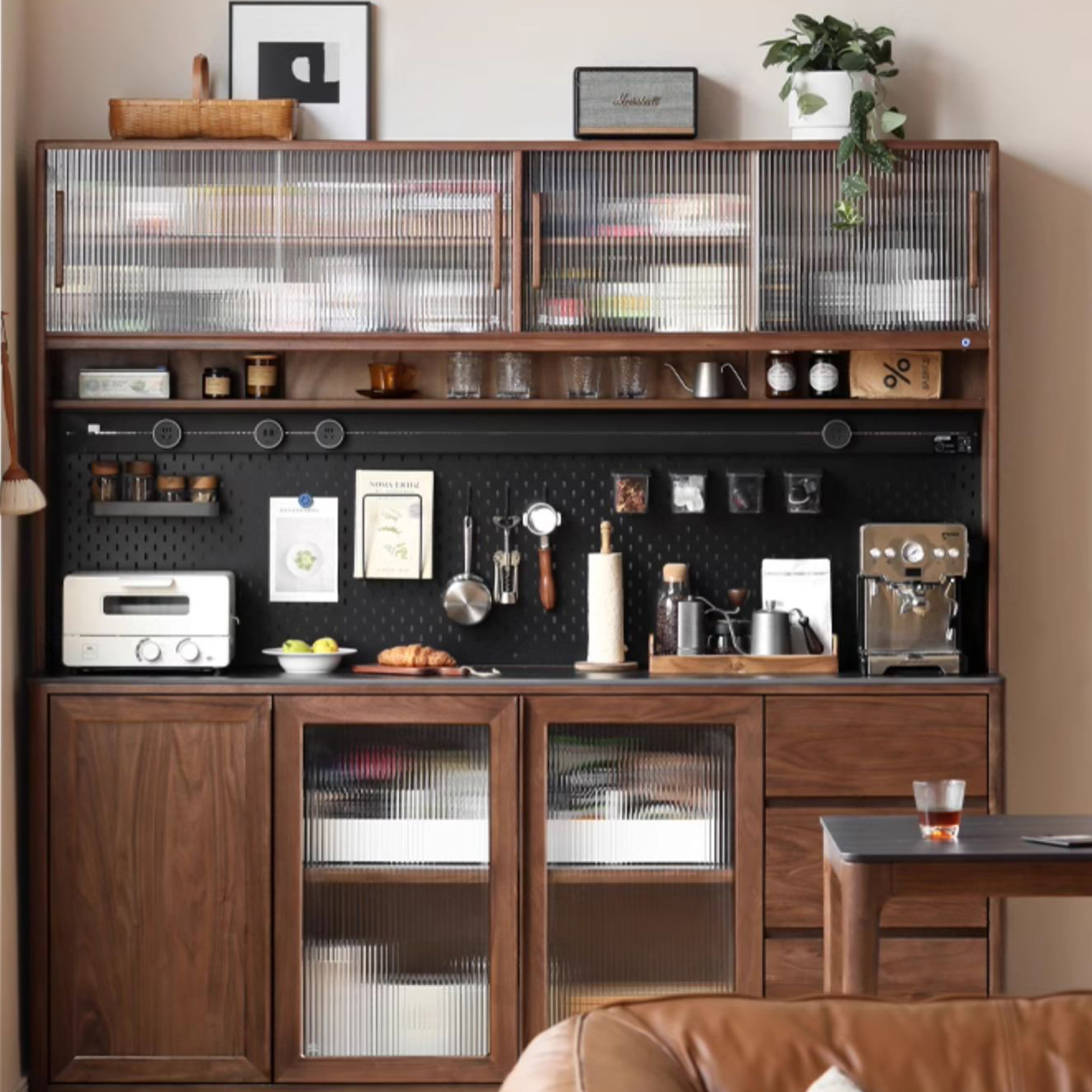
The perforated panel and shelf-pin system looks simple—rows of holes and a set of pins. But the design logic is precise: hole spacing, edge distance, and repeatability determine whether shelves sit stable and interchangeable across modules. Done well, perforated panels make storage adapt to life: taller appliances, changing files, seasonal cookware, or office supplies that grow over time.
In production, the key is drilling consistency. If hole patterns drift even slightly, shelves may rock, pins may loosen, or alignment becomes visually “off” when doors are closed. Factories aiming for reliable modularity typically standardize hole patterns, use CNC or precision boring lines, and apply in-process checks to confirm that the pattern stays consistent from the first panel to the last.
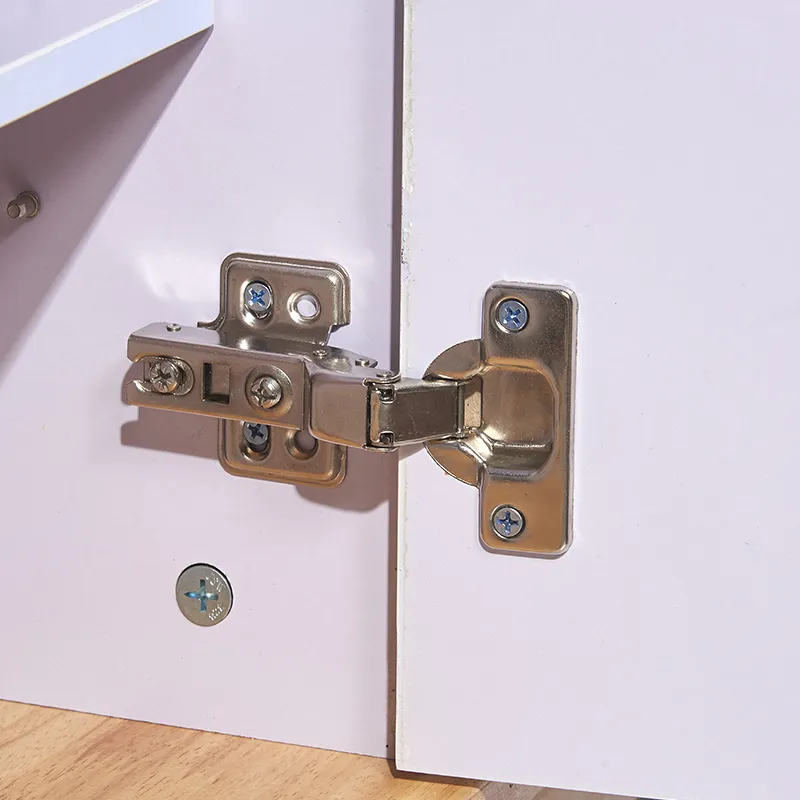
Most end users won’t remember the thickness of a panel, but they will remember how a door closes at 7 a.m. every morning. Hardware installation—hinges, runners, connectors, and fasteners—turns geometry into experience. A cabinet can be cut perfectly and still disappoint if hinge cups aren’t seated cleanly or if runners are not parallel.
Reliable installation is less about speed and more about control: consistent torque, correct pilot holes, proper anchoring in the substrate, and alignment checks at each station. Many quality-focused manufacturers also run functional cycle tests. As a reference, reputable hinge and runner systems are commonly evaluated around 20,000–50,000 cycles depending on intended use and specification. The point is not the number—it’s the discipline of proving function, not assuming it.
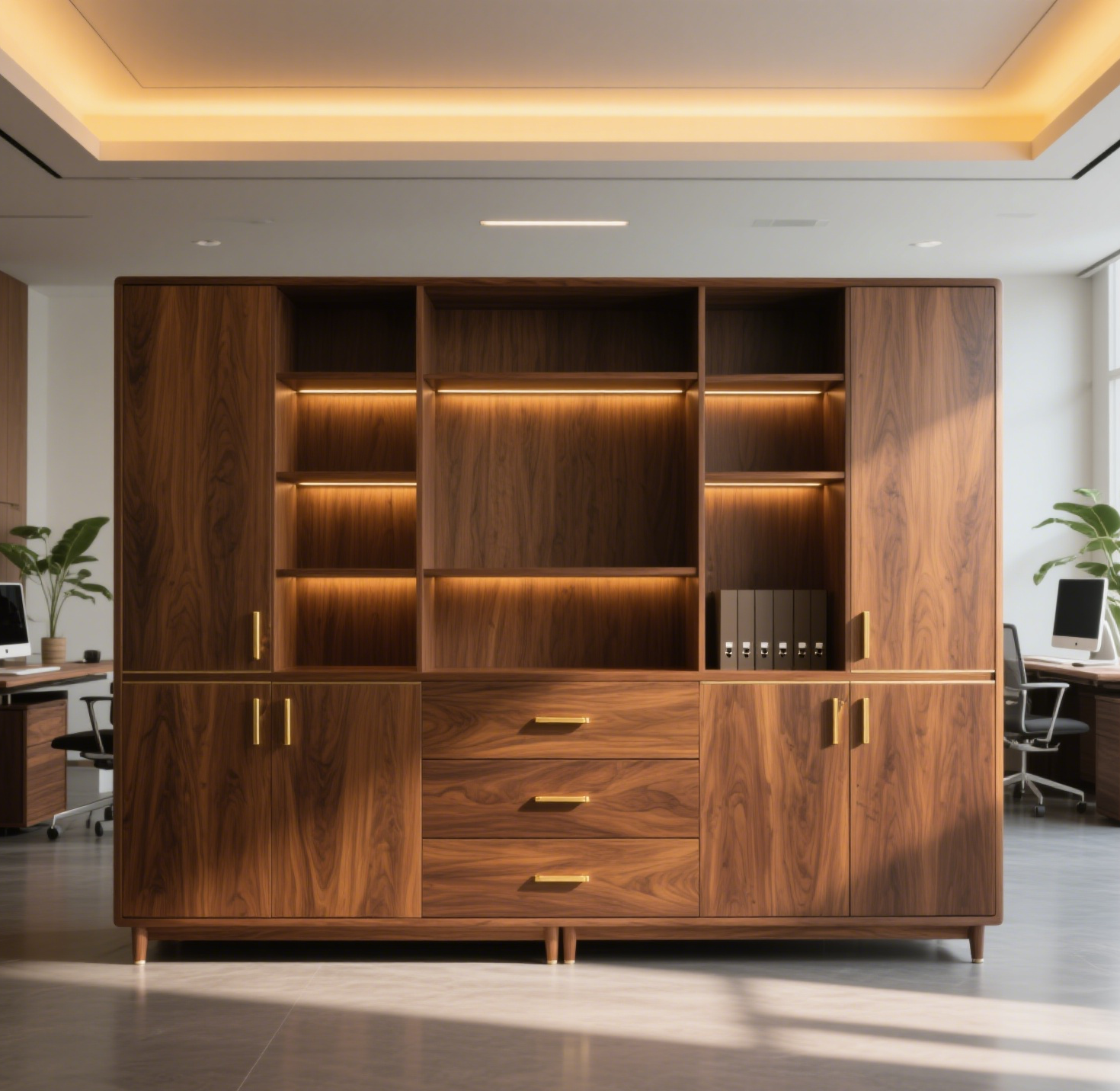
Modular design is often described as a trend. In practice, it is a practical answer to what users do with space: they fill it, then they change it. A layered approach—upper storage for light, occasional items; lower storage for heavy, frequent-use items—improves ergonomics and reduces the chance that shelves deform under repeated load.
For custom furniture projects, modularity also makes delivery and installation more predictable. Panels and modules can be quality-checked by unit, then assembled with clearer tolerances. It’s a manufacturing mindset that respects the fact that most quality problems don’t happen in the brochure—they happen at corners, joints, and hand-contact points.
Precision equipment matters, but consistency often comes from people and station design: clear handoff rules, labeled gauges, defined acceptance criteria, and immediate feedback when a parameter drifts. Factories that keep defect rates low usually don’t rely on “hero operators”—they rely on systems that make the right action the easy action.
One line supervisor described how a small change made a big difference: repositioning inspection lighting and adding a simple go/no-go gauge at the edge banding station. The goal was not to slow down production—it was to catch the first imperfect edge before it became 200 imperfect edges. That kind of quiet improvement rarely appears in marketing, yet it defines whether an order feels “premium” when installed.
These questions are not “too technical.” They are a respectful way to understand whether a supplier’s quality is engineered—or improvised.
When you think about your next kitchen, wardrobe, or workspace, what matters more: perfect appearance on day one, or alignment and smooth function after one year? Share your use case (home, rental, office, coastal climate, dry climate) in the comments—engineers often design better when they can picture real routines.
隆泰装饰 works with projects where expectations are practical: stable doors, clean edges, reliable hardware, and storage that adapts. Whether it’s custom furniture for residential spaces or custom office furniture for teams that open the same drawers hundreds of times a week, the difference comes down to controlled steps—repeated with discipline. We always believe good furniture comes from persistence in every detail.
Button text: “立即咨询专属定制方案”
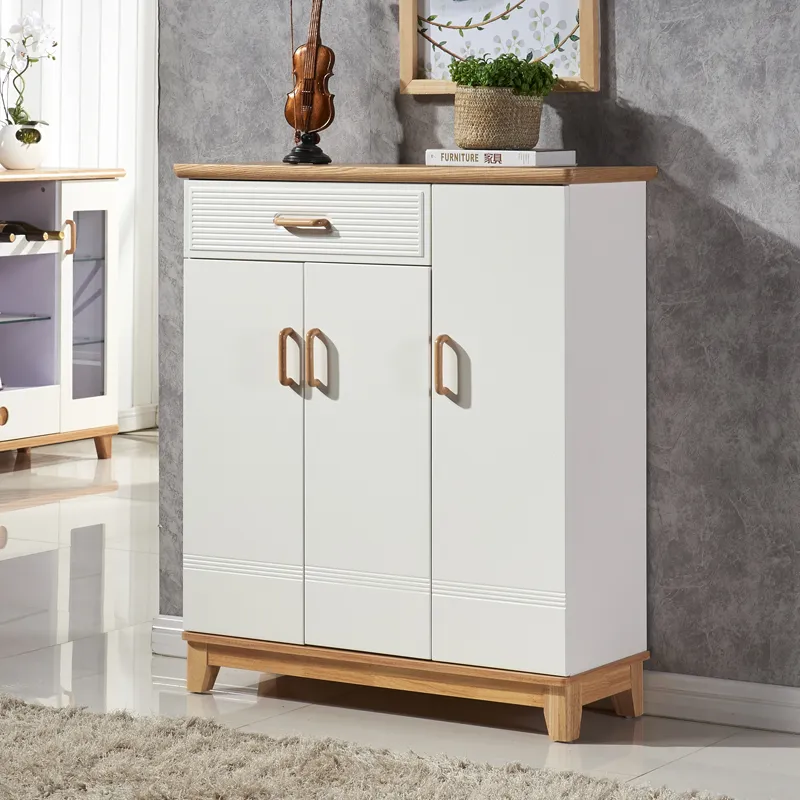

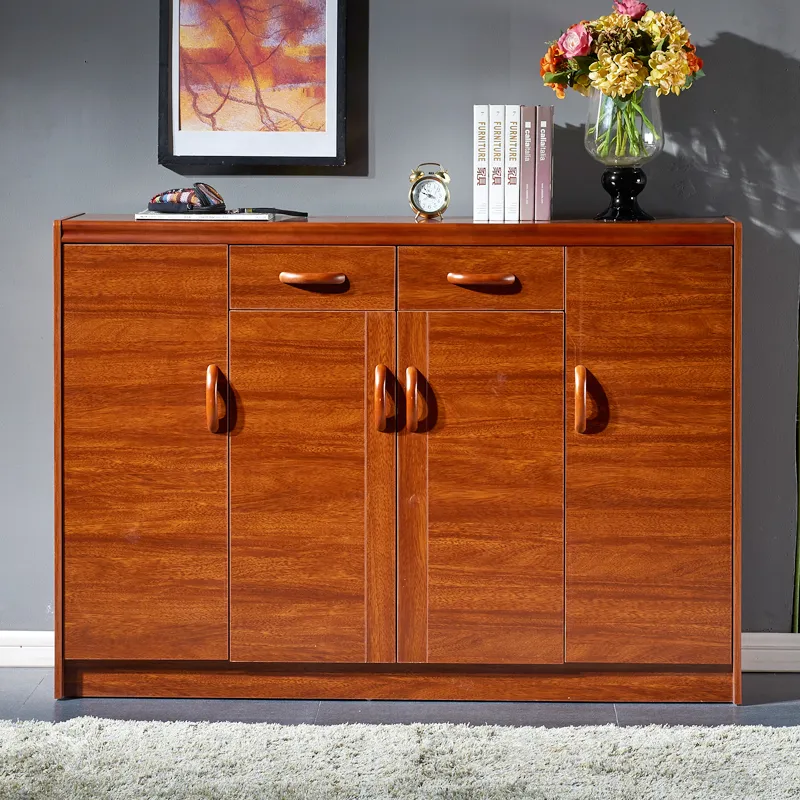
 476
|
476
|
 solid wood furniture vs engineered furniture
furniture buying guide
export furniture market
eco-friendly furniture comparison
home furnishing tips
290
|
oak furniture characteristics
pine furniture pros and cons
walnut wood furniture benefits
solid wood furniture buying guide
wood furniture material comparison
345
|
OEM furniture manufacturing
OEM furniture process
OEM custom furniture
furniture quality control
furniture packing and shipping
282
|
solid wood furniture vs panel furniture
furniture export material selection
B2B furniture sourcing guide
furniture material comparison
furniture export market trends
355
|
OEM furniture manufacturing
custom furniture solutions
private label furniture
furniture MOQ and lead time
furniture quality control
solid wood furniture vs engineered furniture
furniture buying guide
export furniture market
eco-friendly furniture comparison
home furnishing tips
290
|
oak furniture characteristics
pine furniture pros and cons
walnut wood furniture benefits
solid wood furniture buying guide
wood furniture material comparison
345
|
OEM furniture manufacturing
OEM furniture process
OEM custom furniture
furniture quality control
furniture packing and shipping
282
|
solid wood furniture vs panel furniture
furniture export material selection
B2B furniture sourcing guide
furniture material comparison
furniture export market trends
355
|
OEM furniture manufacturing
custom furniture solutions
private label furniture
furniture MOQ and lead time
furniture quality control


.png?x-oss-process=image/resize,h_800,m_lfit/format,webp)