In foreign trade furniture procurement, MOQ (Minimum Order Quantity) is not "factory deliberately holding you back," but rather a tool that factories use to balance production costs, production scheduling risks, and cash flow. If you simply ask, "Can you lower the MOQ?", you'll easily be shut down with "It's the rule." However, when you can break down your needs into actionable combinations, MOQ is actually one of the easiest terms to negotiate.
MOQ (Minimum Order Quantity) is essentially the "minimum economic quantity" that a factory is willing to start production for a particular style, process, color, or packaging method. In the furniture industry, MOQ is often not calculated on a "whole order" basis, but rather broken down by SKU, color, fabric/board batch, hardware, packaging, and other dimensions.
Taking common foreign trade scenarios as an example: In office furniture, different mesh fabrics, sponge densities, gas spring grades, and chassis structures result in different supply chains; in customized furniture, changes in board color, edge banding, and hardware brands significantly increase procurement and production switching costs. This is why you might feel that "the MOQ changes just by changing the color in the same factory."
| Measuring caliber | What you will encounter | The underlying logic (from a factory perspective) |
|---|---|---|
| By SKU/style | "At least X pieces of each style" | Different mold opening/fixture/station switching, inspection procedures |
| By color/fabric/pattern | "At least X pieces of each color" | Upstream raw material minimum order quantity, batch loss, and inventory risk |
| By full container/volume | "At least one or half a container" | Shipping efficiency, packaging and container loading costs |
| By accessories/packaging | "Outer boxes and shipping marks must be uniform." | Packaging and printing minimum order quantity, warehouse picking and misdelivery risks |
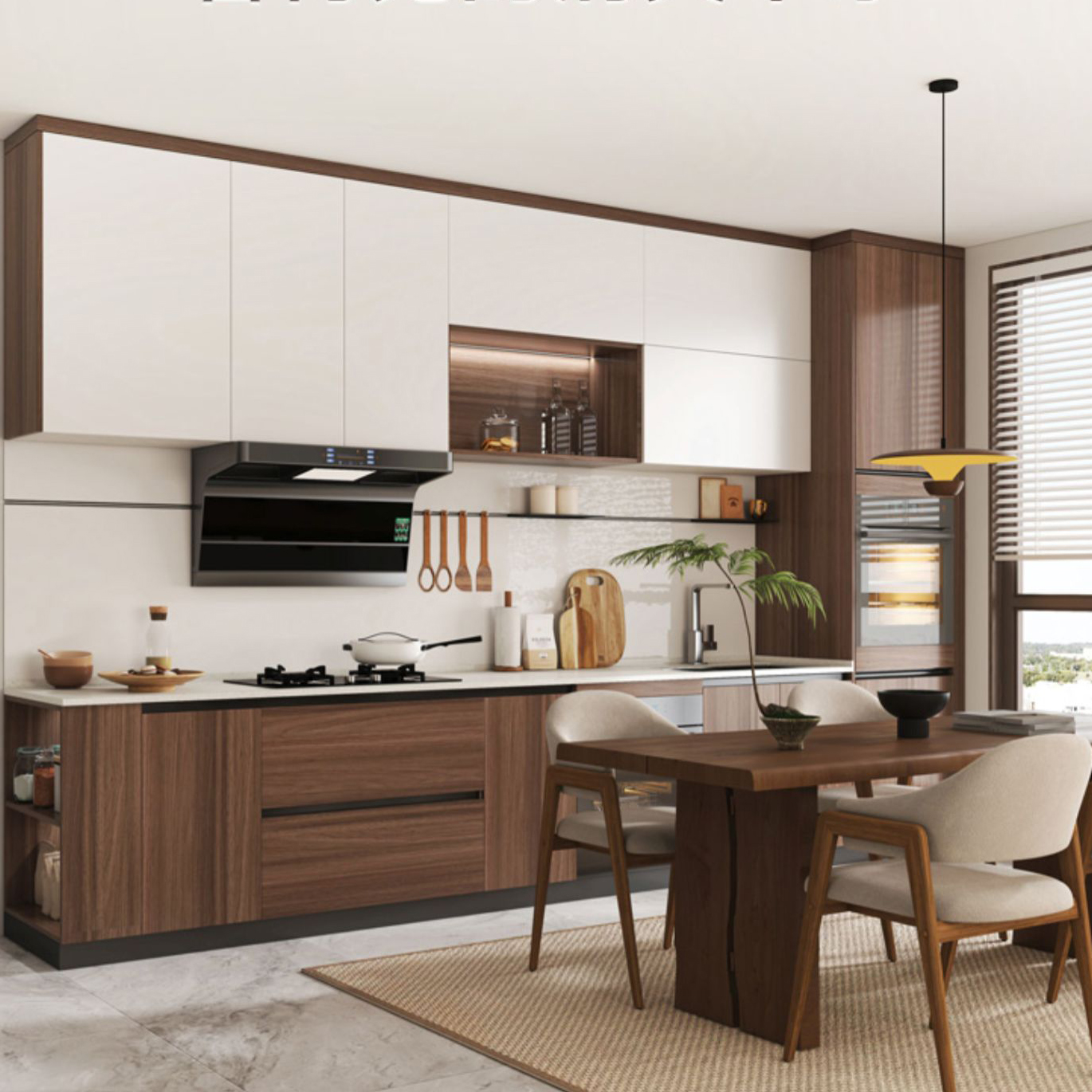
Your goal in setting the MOQ isn't to make it "as small as possible," but rather to align it with your market validation, cash flow, and replenishment schedule. Export furniture is a category characterized by large volume, long lead times, and numerous SKUs. Setting the MOQ too high often leads to the following chain reactions:
From a factory perspective, MOQ is typically determined by three types of costs: startup costs , changeover costs , and uncertainty costs . If you can "resolve a portion" of one of these costs for the factory, the MOQ becomes easier to adjust.

What you need isn't a simple "Can you lower the MOQ?", but a plan on "How can I make you more willing to take smaller orders?" You can directly copy and paste the following path into your email/WhatsApp/LinkedIn communication.
First, confirm the MOQ: by SKU? By color? By full container?
Break down the requirements into "standard items + optional items", and prioritize the standard items.
Use a combination strategy to increase sales volume: combine multiple styles, use the same materials and colors, and use interchangeable accessories.
Trading "phased ordering" for "certainty in factory production scheduling"
Include concessions in the terms: order replenishment window, material locking, color code standardization.
You can combine multiple similar SKUs into a single production task: the same sheet material color, the same paint color, the same mesh/leather batch, and the same packaging specifications. For factories, this isn't about "reducing MOQ," but rather "you help me increase the batch size," which they are more willing to cooperate with.
If you're purchasing office furniture, a common practice is to package chairs, conference tables, filing cabinets, and workstation partitions into a "project package." If you're ordering custom furniture, you can group cabinets, doors, drawers, hardware, and baseboards into the same batch. You need to emphasize: I'm not doing a small trial order; I'm creating a replicable project model .
Many purchasing managers make the mistake of "just aiming for the current small MOQ"; a better approach is to provide a two-stage plan: a trial order to verify market and quality consistency, and a follow-up order to complete the factory's economic quantity (EMQ). You could propose: the first batch is below the MOQ, but the second batch will be completed to the factory's standard quantity within 60–90 days, and include the follow-up order window in the PO terms.
A mere promise of "large orders coming in" has limited persuasive power. You can provide more verifiable materials: annual demand range, quarterly new product launch schedule, channel distribution plan, and compliance requirements list for target markets (such as the US/Germany/Middle East). For factories, this information means your orders are more predictable, making them more willing to concede MOQ.

Scenario: You are providing support for an overseas engineering project and need a batch of office furniture for showrooms and initial distribution. The factory's MOQ is "50 pieces per style and color," but you only need 10-20 pieces per style.
Yes, but you have to accept the "trial order conditions." Common practice is to only offer standard configurations (standard colors/standard fabrics/general packaging) and require you to provide a clear order window for additional orders. The fewer non-standard items you can reduce, the more willing the factory will be to release small batches.
First, ask about the MOQ (by SKU/color/full container), then clearly state your "uniform variables," and only then should you ask for a quote. Otherwise, the quote you receive is likely based on the most conservative MOQ and the most unfavorable production assumptions.
Your sales pitch needs to shift from "I'll make you lose money" to "I'll help you reduce your risk." Present the solution as: standardizing materials and colors, merging batches, phased order replenishment, advance confirmation of packaging and labeling, and providing quarterly forecasts. The focus of the negotiation shifts from "cheaper/less" to "more certain/more controllable."
It's usually more difficult because colors, edge banding, hardware, and structure can all be non-standard variables. You can prioritize standardizing the "cabinet structure and hardware system," leaving variations to low-risk aspects like door panels and handles, thus reducing the factory's concerns about small orders. Supply chains like Longtai Decoration, which manufactures custom and office furniture, are often better suited to using "project packages + standardized modules" to optimize the minimum order threshold.
Inconsistent color/fabric batches can lead to color differences and rework, as well as mis-shipments caused by inconsistent packaging. You should clearly specify color/batch management, packaging specifications, marking rules, and a reorder window in your purchase order to avoid subsequent "hidden costs."
You can send us your target market, SKU list, expected quarterly purchase volume, color/material preferences, and shipping method. We will help you organize the "batch consolidation + phased ordering + terms and conditions" into a single page that can be directly communicated to the factory. This is suitable for export procurement scenarios involving custom furniture and office furniture .
Where are you currently stuck in the MOQ process? Please leave a message in the format below so we can more easily provide you with an actionable solution:

 355
|
355
|
 OEM furniture manufacturing
custom furniture solutions
private label furniture
furniture MOQ and lead time
furniture quality control
471
|
board furniture advantages
solid wood furniture comparison
furniture material selection
international buyer furniture guide
eco-friendly furniture options
374
|
wooden furniture moisture protection
how to clean wooden furniture
DIY wood scratch repair
实木家具保养指南
家居防潮技巧
42
|
Wooden furniture vs panel furniture
Furniture material selection guide
Export furniture procurement advice
Environmental furniture comparison
Home decoration material analysis
48
|
Wooden cabinet material selection
Identification of genuine logs
Cabinet environmental protection level
Timber moisture content control
Water-based paint vs. oil-based paint
OEM furniture manufacturing
custom furniture solutions
private label furniture
furniture MOQ and lead time
furniture quality control
471
|
board furniture advantages
solid wood furniture comparison
furniture material selection
international buyer furniture guide
eco-friendly furniture options
374
|
wooden furniture moisture protection
how to clean wooden furniture
DIY wood scratch repair
实木家具保养指南
家居防潮技巧
42
|
Wooden furniture vs panel furniture
Furniture material selection guide
Export furniture procurement advice
Environmental furniture comparison
Home decoration material analysis
48
|
Wooden cabinet material selection
Identification of genuine logs
Cabinet environmental protection level
Timber moisture content control
Water-based paint vs. oil-based paint


.png?x-oss-process=image/resize,h_800,m_lfit/format,webp)