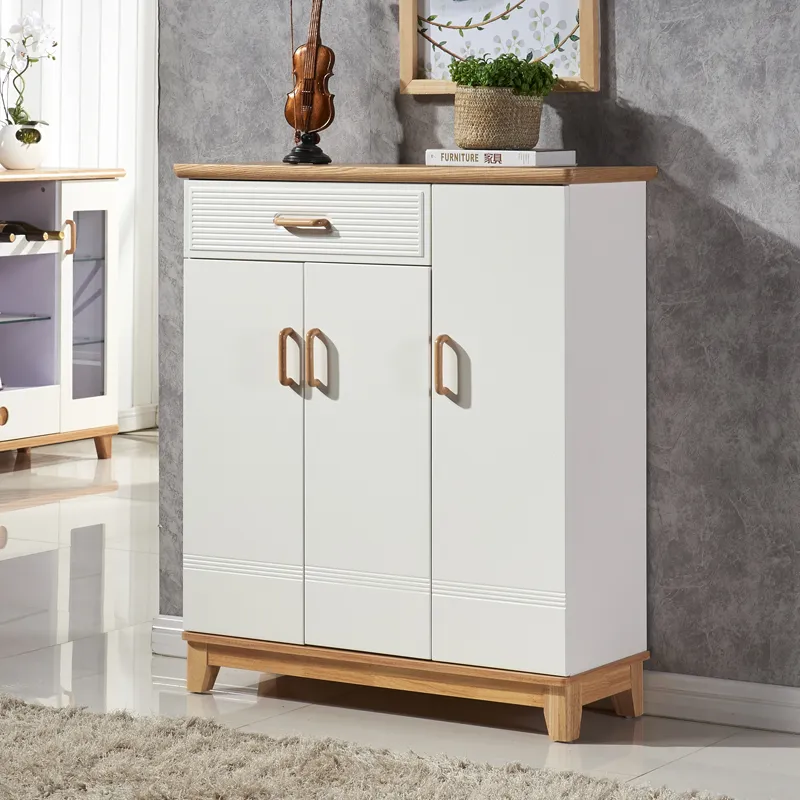
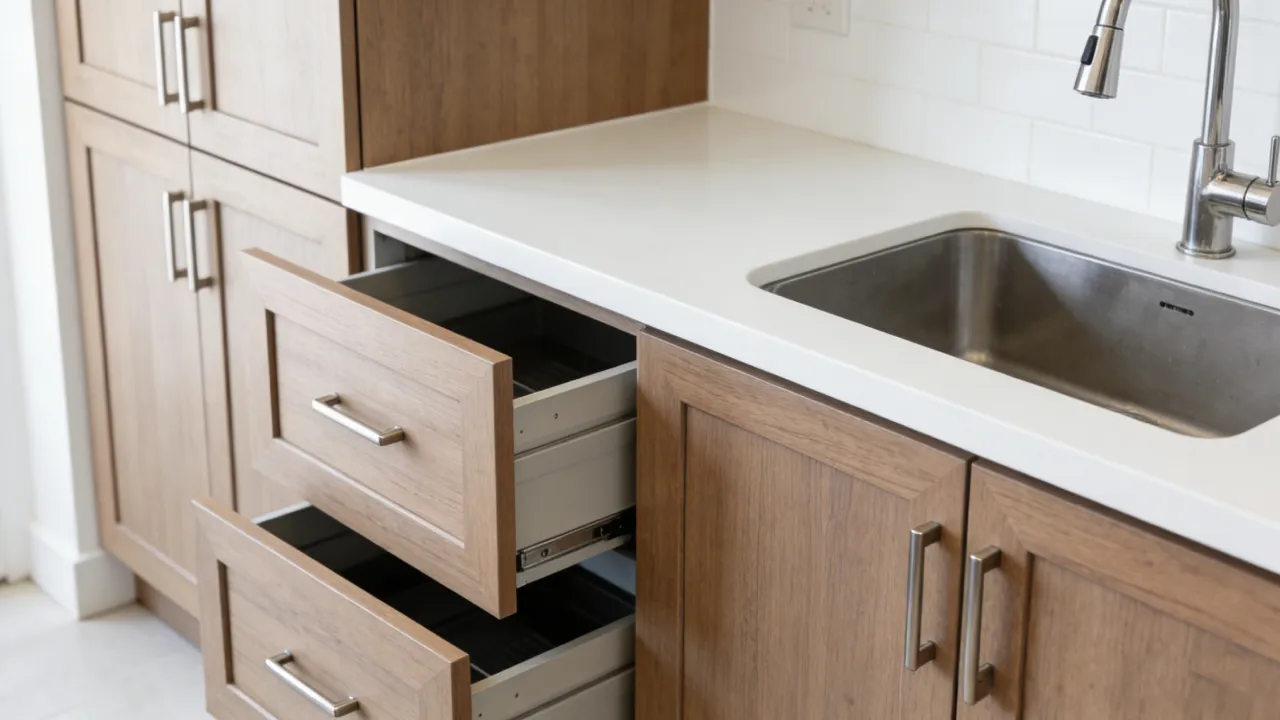
Integrated entryway cabinet system: a modular design solution for entryway shoe storage and space optimization.
2026-04-10
Product description
This article focuses on the "storage efficiency + space optimization" goals of integrated entryway cabinet systems, systematically outlining modular entryway cabinet design concepts suitable for different apartment types. The content covers the functional integration of shoe cabinets, coat racks, drawers, and storage cabinets, combined with detailed configurations such as ventilation, moisture control, dehumidification, and lighting, helping users establish a clear flow of movement and a logical organization of frequently used items within limited entryway space. It also compares the differences in environmental friendliness, durability, and maintenance difficulty among common board materials, providing more practical material selection suggestions. Through case studies of small apartments and large single-level homes, it demonstrates key points of rational layout and user-friendly design (such as multi-functional hooks, ergonomic handles, and ventilation holes), achieving a unified balance of neatness, aesthetics, and usability in the entryway.

The most worthwhile storage upgrade at the entrance: How to make your shoe cabinet more attractive and functional with an integrated entryway cabinet.
For most families, the entryway isn't the largest space, but it's often the place where "clutter most easily occurs": shoes have nowhere to land, bags and keys are hard to find, and coats pile up like small mountains after being hung up haphazardly. A more practical problem is that the entryway has a short traffic flow, inconsistent ventilation, and extremely high daily usage frequency; if poorly designed, it almost always requires "remedial storage" every day.
Therefore, more and more users are starting to pay attention to integrated entryway cabinet systems : through a modular structure, shoe cabinets, coat racks, drawers, shoe-changing benches, lighting, and dehumidification functions are integrated into one system, transforming the entryway from a "temporary storage area" into a "highly efficient entrance station." Longtai Decoration emphasizes feasible dimensions, traffic flow, and material logic in its implementation plans to avoid designs that are merely aesthetically pleasing but impractical.
The core of an integrated entryway cabinet: modularity is not about "pieced together," but about controllable space planning.
The key to a good entryway cabinet isn't its size, but whether each compartment serves real-life needs. The advantage of a modular entryway cabinet lies in breaking down high-frequency needs into combinable standard units, which can then be reassembled according to the apartment layout and family structure. For users, this means lower costs for future additions, adjustments, and maintenance, and easier maintenance to maintain a consistent style.
Infographic: List of common "functional modules" in the entryway (sorted by frequency of use)
| Module |
Problems to be solved |
Suggested approach (practical) |
| shoe cabinet area |
The shoes are plentiful, have a strong odor, and are inconvenient to change. |
Frequently worn shoe compartments + enclosed shoe compartment zones; pre-installed ventilation holes/louvers; bottom opening for better robot vacuum entry. |
| Clothes/Bag Area |
Coats, umbrellas, and bags are hung haphazardly. |
Multi-purpose hooks + short hanging area; independent umbrella compartment with waterproof tray. |
| Drawers/Miscellaneous Area |
Keys, access control, and mask charging cable "missing" |
Shallow drawer dividers (smaller compartments are more practical); a fixed countertop for easy placement upon arrival at home. |
| shoe changing bench |
Elderly people/children find changing shoes tiring and are prone to falling. |
A stool height of approximately 420–450mm is more comfortable; a pull-out shoe compartment can be installed under the stool. |
| Lighting/Dehumidification |
Dark, damp, and prone to mold |
In-cabinet sensor lights enhance the user experience; in humid areas, dehumidification/ventilation structures and moisture-proof panels can be added. |
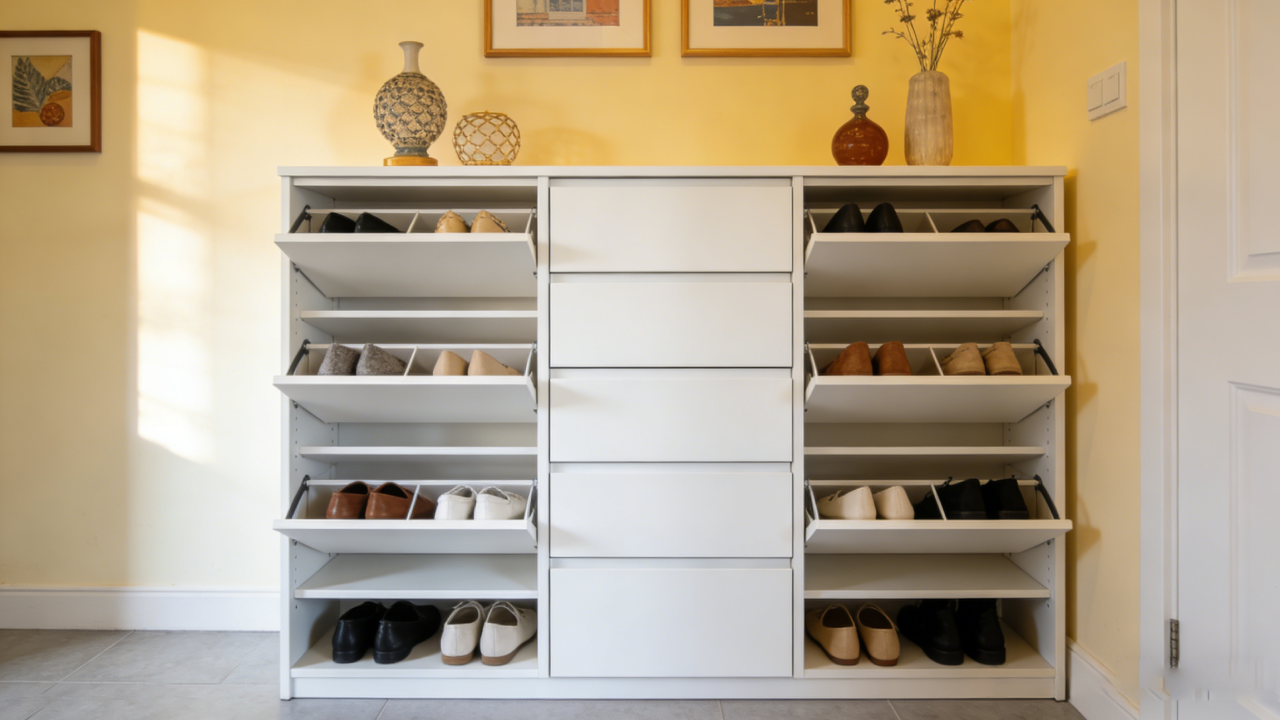
What many users care about most is "whether it's convenient to move in." The value of modular design lies in providing a corresponding place for every action: entering the door—putting down keys—hanging bags—changing shoes—putting down coats—storing packages and scissors. The shorter the traffic flow, the less cluttered the entryway will be.
Functional integration: Combining storage, display, lighting, and dehumidification into a single system.
Entryway cabinets are more than just "shoe cabinets + cabinet doors." In real-world use, systematic integration can significantly improve efficiency and aesthetics: for example, combining display areas with countertops for placing aromatherapy products and door disinfection supplies; embedding lighting into the cabinet so you don't have to fumble in the dark when returning home at night; and incorporating dehumidification and ventilation into the structure to reduce the risk of odors and mold at the source.
Schematic diagram: The "three zones and two lines" logic of an efficient entryway (easy to understand and implement)
Three Districts
- Handling area: Keys/access control/delivery scissors (countertop + shallow drawer)
- Placement area: Shoes that are frequently worn (with open soles for easy cleaning)
- Hanging area: coats/bags/umbrellas (hooks + short hanging clips are more practical)
Two lines
- Homebound Line: Put things away before entering the house to reduce bringing dirt and mess into the home.
- Before leaving home: shoes—keys—bag—mirror check, complete in one go, no need to redo.
Reference data: In a typical family interview, the "coming home" process in the entryway involves an average of 4-6 action points; if each action can be completed in one step, the daily storage and maintenance time of the entryway can usually be reduced by about 30%-50% (depending on family members and the number of shoes).
Material selection: Environmental friendliness, durability, and ease of maintenance determine the "long-term experience" of your entryway cabinet.
The entryway is a high-wear area: dust from shoe soles, moisture from the rainy season, and frequent opening and closing and impacts all accelerate aging. When choosing materials and surface finishes, users often overlook the "subsequent maintenance costs"—they may look similar, but the difference will become apparent after two years of use.
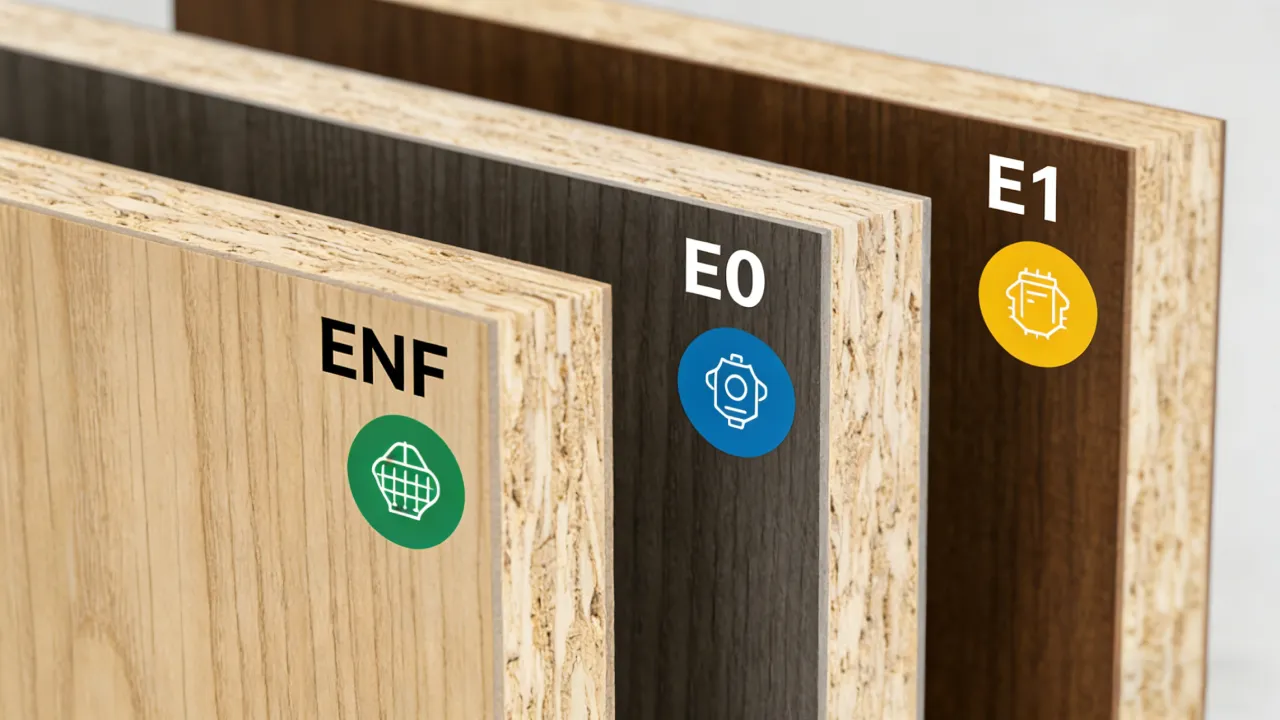
Comparison Chart: Key Considerations for Commonly Used Board Materials in Entryway Cabinets (Material Selection Made More Evidence-Based)
| Materials/Process |
advantage |
More suitable for families |
Maintenance points |
| ENF/E0 grade environmentally friendly boards (such as particleboard/plywood) |
A more pleasant scent, and greater peace of mind in daily life. |
Those with children are more sensitive to indoor air quality. |
Edge banding is just as crucial as hardware; it's essential to prevent moisture from causing bulging. |
| PET/Abrasion-resistant finish |
More scratch resistant and fingerprints less noticeable |
High-frequency opening and closing, prefers matte texture |
Neutral cleaning is sufficient; avoid strong solvents. |
| Painted/High-gloss surface |
The visual effect is brighter and neater. |
The entryway has poor lighting; I want to increase its brightness. |
Be careful of bumps and scratches; clean with a soft cloth. |
| Aluminum frame glass door/open grid |
Lightweight and visually appealing |
A balance between "display and storage" is needed. |
The number of open shelves should be controlled to avoid them becoming cluttered storage shelves. |
Reference data: During the rainy season in southern China, indoor relative humidity often reaches 70%–90%. If the entryway cabinet is enclosed and lacks ventilation, it is more prone to odors and mold. Adding ventilation holes, leaving openings, and using more secure edge sealing techniques can usually significantly reduce the problems caused by dampness.
How to layout different apartment types: Small apartments require "reduced movement," while large apartments require "differentiated layouts for different scenarios."
The most frequently asked question by users is: My entryway is very small/very large, how can I make the most of it? The truly effective space utilization solution is not to fill it with cabinets, but to let the entryway fulfill its appropriate functional boundaries.
Small apartments/compact entryways (with a greater focus on storage efficiency)
- Prioritize "thin + tall": control the depth to about 300-350mm to avoid obstructing the way (actual measurements need to be taken in conjunction with shoe size and door frame).
- The open bottom makes it more practical: people who wear shoes often don't have to open the door every time, and the robot vacuum cleaner can also get in and out more easily.
- Clearly define your "hands-off area": a countertop plus shallow drawers makes it look less cluttered than multiple open shelves.
- Mirror and LED strip combination: Improves lighting, making outings more efficient.
Large single-level apartment/spacious entryway (with a greater emphasis on zoning and a sense of ceremony)
- Shoe cabinet zoning is even more important: everyday shoes, guest shoes, and seasonal shoes should be managed separately so that they do not interfere with each other when taking them out.
- Add a "transition zone": This can be combined with display shelves, focal points, and storage to make the entryway more organized.
- The hanging area can be expanded: a combination of short and long hanging racks can accommodate both coats and children's jackets.
- Incorporate dehumidification and ventilation into the system: reduce the risk of stuffy odors in enclosed cabinets.
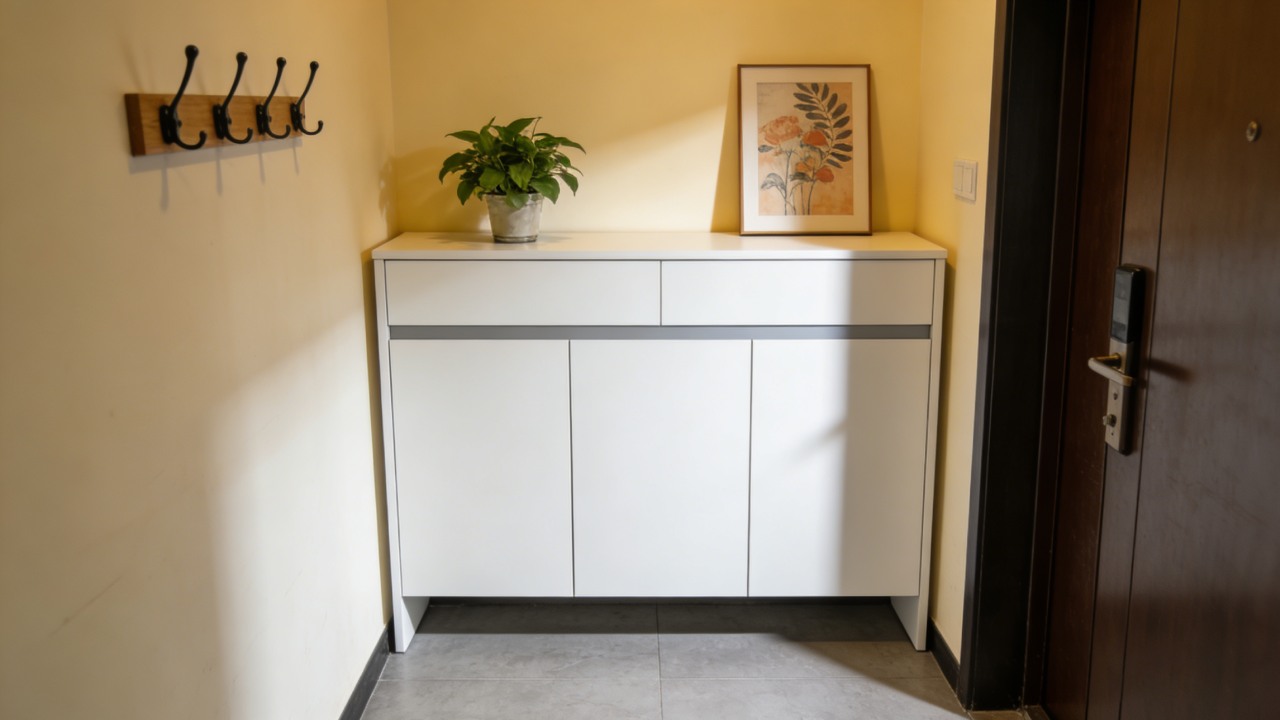
Details determine "ease of use": multi-purpose hooks, ergonomic handles, and ventilation and moisture protection.
The reputation of a good entryway cabinet often comes not from its "high-end look," but from its "comfortable daily use." In real-world use, high-frequency touchpoints include: the feel of the opening and closing mechanism, the way you change shoes, the placement of hooks, the odor inside the cabinet, and the difficulty of cleaning. Designing these details in advance is key to a user-friendly entryway cabinet.
A "self-checklist" that is closer to the user's perspective (can be used before renovation).
- Are the multi-purpose hooks convenient enough? Do adult coats, children's backpacks, and shopping bags each have their own designated places to prevent them from getting stuck together?
- Can drawers really hold all the odds and ends? Shallow drawers with dividers make it easier to stick to the "put them away as soon as you get home" rule and reduce clutter on the countertop.
- Should ventilation and moisture control be incorporated into the structure? It is recommended to add ventilation holes/louvers to enclosed shoe cabinets; in humid areas, more attention should be paid to dehumidification design and edge sealing quality.
- Are the handles and door opening methods easy to use? Ergonomic handles or push-button mechanisms should take into account the grip strength and height of elderly people and children in the family.
- Is it easy to clean? A bottom with open space, a durable finish, and reasonable partitioning are generally easier to maintain than "many open compartments".
Transform the entryway from a cluttered entrance into an efficient entry station.
Longtai Decoration focuses on modular, practical designs, workflow, and material details to ensure that integrated entryway cabinets are not only aesthetically pleasing but also durable and functional over the long term. Different apartment layouts, family structures, and storage habits require different system solutions.
Learn about integrated cabinet design solutions suitable for your home →
Suggested preparations: net dimensions of the entryway, direction the front door opens, number of shoes frequently worn by the family, and whether a shoe-changing bench/coat-hanging area is needed for more efficient communication.